AT A GLANCE: SNOWFALL IN SHIMLA AND KUFRI
| First Snowfall | Usually mid-December |
| Peak Snow Month | January |
| Snow Season | December to February |
| Kufri vs Shimla Snowfall | Kufri gets 30-50% more (417 m higher altitude) |
| Average Snowfall Days in January | 8-12 days in Shimla | 10-14 days at Kufri |
| Best Base for Snow Viewing | Kufri Heritage Resort and Spa (2,622 m) |
Every winter, thousands of travellers from across India head to Shimla hoping to catch snowfall. For many, it is a once-in-a-lifetime moment. For others, it is an annual pilgrimage. Either way, the question is always the same: when does it snow in Shimla, how much does it actually snow, and how do you make sure you do not miss it? This guide covers everything you need to know about Shimla snowfall for the 2025-26 winter season – month-by-month data, how Kufri compares, how to track forecasts in real time, and what to do once the snow arrives.
Month-by-Month Snowfall Guide for Shimla and Kufri
Shimla’s snowfall calendar follows a fairly consistent pattern year after year, driven by Western Disturbances moving across North India from the Arabian Sea and Mediterranean. Knowing what to expect each month helps you plan your visit around real conditions rather than hope.
November – Very Rare Snowfall
November snowfall in Shimla is possible but uncommon. When it does occur, it typically happens in the last week of the month and rarely results in accumulation at lower elevations. Kufri and higher ridges around 2,500 metres might see a light dusting, but it tends to melt within hours. If you are visiting in November purely for snow, the odds are not in your favour. However, November is excellent for crisp mountain air, clear skies, and the first bite of winter cold without the crowds of peak season.
December – Snow Begins Mid-Month
This is when the season properly begins. The first significant snowfall of winter usually arrives between 10 and 20 December, triggered by early Western Disturbances. Shimla city typically sees 1-3 snowfall events in December, with accumulations ranging from a light dusting to around 12 inches in a heavy event. At Kufri, sitting 417 metres higher, snowfall begins slightly earlier and accumulates more. By late December, Kufri frequently has a proper snow cover across its slopes. The days leading up to Christmas and New Year are particularly popular, and resorts fill up quickly once snowfall forecasts are confirmed.
January – The Heaviest Snow Month
January is the undisputed peak of the snow season. This is when Shimla and Kufri receive their heaviest accumulations. Multiple Western Disturbances pass through during the month, and it is not unusual for Shimla city to see 8 to 12 days of snowfall. At Kufri, that number rises to 10 to 14 days. Accumulations of 2 to 4 feet are possible after a major January snowfall event, especially at higher elevations. Roads can close for 24 to 48 hours following heavy snowfall, and temperatures frequently drop below freezing overnight. January is the month that delivers the postcard images – thick snow on pine trees, whitened rooftops, children playing in fresh powder. If you can only visit once, January is your month.
February – Frequent but Shorter Events
February continues the snow season with slightly shorter duration events. Western Disturbances still pass through regularly, and snowfall remains frequent, particularly in the first two weeks. By mid-February, the days start to lengthen and temperatures begin their slow climb. Snow events are more likely to melt quickly between episodes. That said, February often surprises visitors with extended snowfall periods, and the lower crowds compared to January can make it a more relaxed choice. Skiers at Kufri will still find decent conditions through most of February.
March – Only Possible in Early Month
Snow in March is limited to the first two weeks at most, and only at higher elevations. Shimla city rarely sees accumulating snowfall after mid-February in recent years, though late-season surprises do occur. At Kufri’s altitude, a March flurry is not unheard of, but visitors should treat it as a bonus rather than an expectation. By late March, spring has firmly arrived at lower elevations and the focus shifts to cherry blossoms and green valleys.
Why Kufri Gets More Snow Than Shimla City
The single biggest factor is altitude. Kufri sits at 2,622 metres above sea level. Shimla city centre is at approximately 2,205 metres. That difference of 417 metres is significant in terms of snowfall behaviour.
At higher altitudes, temperatures are consistently lower, which means precipitation that falls as rain in Shimla city often falls as snow in Kufri. When a Western Disturbance brings moisture-laden clouds across the region, the freezing level – the altitude above which precipitation falls as snow rather than rain – determines how much each location receives. On borderline days when Shimla city gets sleet or cold rain, Kufri can be receiving steady snowfall. This is why visitors who stay in Kufri report far more snow days and deeper accumulations than those staying on The Mall or in lower Shimla.
In practical terms, Kufri typically receives 30 to 50 percent more snowfall than Shimla city during any given winter season. During peak events in January, while Shimla city might receive 15 to 18 inches of snow, Kufri can accumulate 24 to 30 inches from the same weather system. The slopes that support skiing at Kufri rely on this altitude advantage – without it, the ski season would be far shorter.
For visitors, this means that staying at a resort in Kufri rather than in Shimla city dramatically increases your chances of waking up to fresh snow outside your window. The difference between a snowfall experience and a near-miss can often be that 417-metre altitude gap.
Ask the resort about your dates and room needs.
Check current room options and inclusions directly with the resort.
Recent Years – Snowfall Patterns and What They Tell Us
Understanding how recent winters have behaved gives useful context for planning your 2025-26 trip.
2023 – Exceptionally Heavy January Snowfall: The winter of 2022-23 brought one of the heaviest January snowfall events in Shimla in over a decade. Multiple Western Disturbances stacked back-to-back through the first three weeks of January, resulting in sustained accumulations. Kufri recorded over 4 feet of total snowpack at peak. Roads were closed for extended periods, but the spectacle was extraordinary. Visitors who had booked early and stayed in Kufri experienced conditions that are genuinely rare.
2024 – Moderate Season with Good Distribution: The 2023-24 season was more typical in intensity, with snowfall spread reasonably across December, January, and February. January remained the strongest month, but no single event dominated in the way 2023 did. This kind of distributed season is actually ideal for visitors – multiple opportunities across a longer window rather than one all-or-nothing event.
2025-26 Outlook: As of late 2025, IMD (India Meteorological Department) seasonal forecasts suggest normal to above-normal Western Disturbance activity for the Himachal Pradesh region through winter. While no forecast is reliable beyond 2 to 3 weeks for specific snowfall events, the broader seasonal setup appears favourable. January 2026 remains the statistically strongest bet for heavy accumulations.
The key lesson from recent patterns is that snowfall in Shimla and Kufri is reliable at the seasonal level – you will see snow if you visit in January – but the timing of individual events within a trip requires real-time tracking.
How to Track Snowfall Forecasts – Live Resources
Planning around snowfall requires monitoring the right sources. Here are the most reliable ways to track conditions before and during your visit.
IMD Shimla (India Meteorological Department)
The Shimla regional office of IMD is your most authoritative source for snowfall warnings and forecasts. They issue Yellow, Orange, and Red alerts for heavy snowfall events across Himachal Pradesh. Their 5-day forecasts for Shimla district are generally reliable and updated daily. The IMD website (mausam.imd.gov.in) and their Shimla branch (shimla.imd.gov.in) are the starting point for any serious snow-tracking effort.
HP Tourism Alerts and Snow Reports
The Himachal Pradesh Tourism Department regularly updates snow conditions on their official channels during winter. Their reports include road status, ski slope conditions at Kufri, and advisories for tourists. This is particularly useful for understanding whether roads to Kufri are accessible after a fresh snowfall event.
Weather Apps and Sites
AccuWeather, Windy.com, and Weather Underground all provide reasonably granular forecasts for Shimla and Kufri. Windy.com is particularly useful for visualising incoming Western Disturbances on satellite and radar layers – you can watch a system develop over Pakistan and Afghanistan and track its projected path toward Himachal Pradesh several days in advance. For snow depth at altitude, mountain-specific forecasting services like Snow-Forecast.com include the Shimla and Kufri region in their coverage.
Resort and Local Updates
The most immediate way to check current conditions is to contact your resort directly. Kufri Heritage Resort and Spa provides regular winter condition updates to guests, including road status, current snow depth on resort grounds, and skiing availability at Kufri ski slope, which is a short distance from the resort.
Stay at Kufri Heritage Resort and Spa
5-star luxury at 2,622 metres – your perfect Shimla-Kufri base. Spa, restaurant, mountain views and bonfire evenings.
Check Latest Price NowWhat to Do When It Snows – Activities at Kufri and Shimla
Snowfall transforms Kufri and Shimla into something genuinely magical. Here is how to make the most of it when it arrives.
Snow Play and Family Activities
The open meadows around Kufri are perfect for the kind of unstructured snow play that families travel hundreds of kilometres for – snowball fights, building snowmen, and simply walking through fresh powder. The area around Kufri main point has been a snow play destination for generations of visitors. Children who have never seen snow before are invariably overwhelmed by it in the best possible way. Bring waterproof gloves and boots because bare hands in fresh snow lose warmth very quickly.
Skiing at Kufri
Kufri has a small but functional ski slope that operates when snow conditions permit. The Himachal Pradesh Winter Sports Club manages the facility and offers ski equipment rental and basic lessons for beginners. It is not a destination for advanced skiers, but for families and first-timers wanting to try skiing in India, it is one of the most accessible options in the country. The slope is typically active from late December through February, subject to snow conditions. Check with the resort for current slope status before heading there.
Photography
The landscape around Kufri during and immediately after snowfall is extraordinary. Snow-laden cedar and pine forests, Himalayan peaks visible between clouds, and the silence that settles over everything after a heavy snowfall create conditions that are difficult to photograph badly. Early morning, just after snowfall stops, offers the best light and undisturbed snow surfaces. The orchard areas between Kufri and Fagu are particularly photogenic in winter.
Bonfire Evenings at the Resort
There is a specific kind of pleasure in sitting beside a bonfire after a day in the snow. Kufri Heritage Resort and Spa arranges bonfire evenings during the winter season, which become the natural gathering point for guests after a day of snow activities. With hot drinks, mountain views, and the warmth of a fire against the cold air, it is one of those experiences that guests consistently remember as the highlight of their stay.
Snow Spa Day
After hours in the cold and snow, the resort’s spa offers an ideal contrast – warm treatments designed for recovery and relaxation. A combination of outdoor snow activities in the morning and a spa session in the afternoon is one of the most popular winter itineraries for guests staying at Kufri Heritage.
Road Safety and Getting to Kufri During Snowfall
One of the most common concerns for winter visitors is road safety and accessibility. Here is what you need to know.
NH5 (National Highway 5) – Shimla to Kufri
NH5, which connects Shimla to Kufri and continues toward Narkanda, is a priority road for the Himachal Pradesh Public Works Department during winter. After a major snowfall event, the highway is typically cleared within 24 to 48 hours. Salt spreading and mechanical clearing equipment are deployed as standard. The road from Shimla to Kufri specifically – a distance of 13 km – is cleared faster than more remote routes because of the volume of tourist traffic it handles.
During Active Snowfall
While snow is actively falling, driving in the Shimla and Kufri region requires care. Tyre chains are recommended for personal vehicles during heavy snowfall. Many travellers from lower altitudes are not accustomed to snow driving conditions, and it is sensible to either stay put during the heaviest part of a snowfall event and travel afterward, or to ensure your driver has experience on mountain roads in winter. Taxis and cabs operating in the Shimla-Kufri area during winter are generally equipped and experienced for these conditions.
Gear You Should Pack
Coming prepared makes a significant difference to your snow experience. The essentials for a winter Kufri visit include: waterproof ankle boots or snow boots (standard sneakers become dangerously slippery on compacted snow), thermal inner layers for both top and bottom, a windproof outer jacket, waterproof gloves (not just wool gloves), and wool or thermal socks. Sunscreen is frequently overlooked but important – UV intensity at 2,600 metres combined with snow reflection can cause sunburn even on cold days. Hand warmers are a small addition that guests consistently say they were glad they brought.
Kufri Heritage Resort and Spa – Your Snow-Season Base
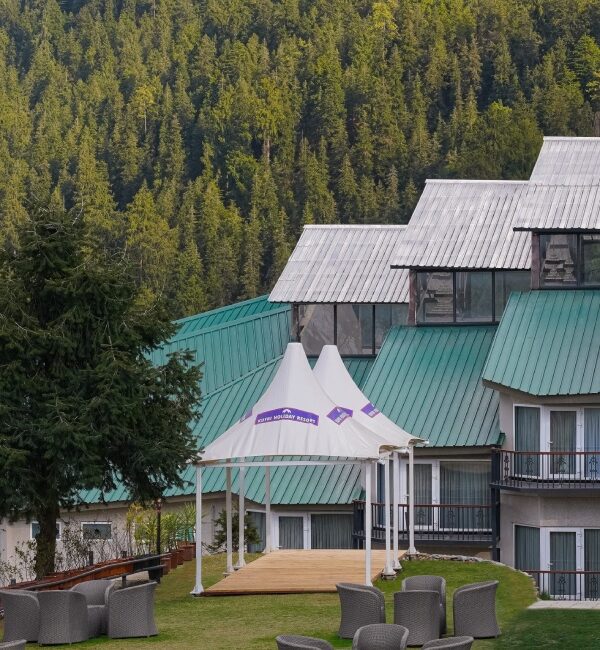
Choosing the right base for a Shimla snowfall trip makes a significant difference to the overall experience. Kufri Heritage Resort and Spa sits at 2,622 metres – at the same altitude as the best snow conditions in the region – and is positioned 13 km from Shimla city centre, giving guests access to both destinations without the noise and congestion of staying in Shimla city itself.
The resort offers 5-star facilities including a full-service spa, multi-cuisine restaurant, and rooms with direct Himalayan mountain views. In winter, the snow line is effectively at your doorstep. Guests do not need to travel to find snowfall – on heavy snow days, the resort grounds themselves are covered. The bonfire setup, warm dining options after cold days outside, and the spa create a complete winter experience that urban hotels in Shimla city simply cannot replicate.
The resort is also the most logical starting point for day trips in either direction – toward Shimla city for The Mall, Jakhu Temple, and the historic areas, or further up toward Narkanda and Hatu Peak for deeper snow and more remote landscapes. Kufri’s ski slope is a short drive away, and the resort team can assist with arrangements for skiing, local guides, and transport.
Winter room rates vary by date and availability. Check for the latest price before booking, as rates change with season demand – particularly around Christmas, New Year, and the predicted heavy snowfall windows in January.
Plan Your Shimla and Kufri Stay
Kufri Heritage Resort and Spa – 13 km from Shimla, direct access to all attractions. 5-star comfort with Himalayan views.
Call for Best PriceFrequently Asked Questions: Snowfall in Shimla 2025-26
Does Shimla get snow every year?
Yes, Shimla receives snowfall every winter without exception. The timing and quantity vary from year to year depending on Western Disturbance activity, but January snowfall in particular is virtually guaranteed. Even in lighter winters, at least 3 to 5 snowfall events occur between December and February across the Shimla-Kufri region.
Does Kufri get more snow than Shimla city?
Yes, consistently and significantly. Kufri sits 417 metres higher than Shimla city centre at 2,622 metres versus 2,205 metres. This altitude difference means Kufri receives 30 to 50 percent more snowfall than Shimla city in a typical season. On borderline precipitation days when Shimla gets rain or sleet, Kufri often receives snow. If seeing and experiencing snow is your primary goal, Kufri is the better base.
What is the best week to visit Shimla for snowfall?
The second and third weeks of January are statistically the strongest window for heavy snowfall. This period sits squarely within peak Western Disturbance season and historically accounts for the most significant accumulation events. That said, snowfall cannot be predicted with precision more than 5 to 7 days in advance, so monitoring IMD alerts as your travel date approaches is the best strategy regardless of which week you choose.
What if it does not snow during my visit?
Even without active snowfall, a winter visit to Kufri and Shimla between December and February will typically encounter residual snow on slopes and at higher elevations from previous snowfall events. The cold, the mountain scenery, the pine forests, and the entire winter atmosphere remain compelling even between snow events. At Kufri Heritage Resort and Spa, guests can enjoy the spa, bonfire evenings, and the mountain views regardless of whether fresh snow falls during their specific dates.
How do I check the snowfall forecast before I travel?
The most reliable sources are the IMD Shimla regional office website (shimla.imd.gov.in) for official alerts and warnings, Windy.com for real-time visualisation of incoming weather systems, and AccuWeather or Weather Underground for 5-day forecasts. For current on-the-ground conditions at Kufri specifically, contacting Kufri Heritage Resort and Spa directly before travel will give you an immediate and accurate picture of snow depth and road conditions.
Check conditions close to your travel date
Confirm current road conditions and room availability directly before booking.