
AT A GLANCE: JAKHU TEMPLE SHIMLA
| Altitude | 2,455 metres (8,048 feet) |
| Hanuman Statue Height | 33 metres |
| Temple Timings | 7:00 AM to 8:00 PM (daily) |
| Entry Fee | Free | Ropeway Rs 250-300 roundtrip |
| Distance from Mall Road | 2.5 km (45-60 min trek) |
| Distance from Kufri | 11 km |
Jakhu Temple is one of the most visited and spiritually significant sites in all of Himachal Pradesh - an ancient Hanuman shrine perched at 2,455 metres on the highest peak within Shimla town, crowned by a towering 33-metre statue that can be spotted from virtually every corner of the city. Whether you choose to trek the forested 2.5 km path from Mall Road, glide up by ropeway, or combine both for a complete experience, a visit to Jakhu is an essential part of any Shimla itinerary. This complete 2026 guide covers everything you need to know - timings, the trek, the ropeway, the legendary macaques, photography tips, and how to reach Jakhu Temple from Kufri.
Jakhu Temple History and the Legend of Lord Hanuman
According to Hindu mythology, Jakhu Hill holds a place of extraordinary importance in the Ramayana. When Lakshmana - brother of Lord Rama - was gravely wounded in battle with the demon king Ravana, the divine physician Sushen prescribed the Sanjeevani herb as the only cure. Lord Hanuman was tasked with fetching this life-giving plant from the Himalayas, and it is believed that he rested at this very peak during his search. The spot where his foot touched the earth was consecrated, and a temple was built there in his honour - making Jakhu Temple one of the oldest Hanuman shrines in North India.
The temple itself is thought to be several thousand years old, though the current structure dates to a more recent restoration. Ancient texts and local oral tradition both confirm the site's Ramayana connection, and devotees consider a visit here to be of immense religious merit. The name "Jakhu" is believed to derive from "Yaksha," a class of nature spirits in Hindu cosmology, pointing to the hill's long pre-Vedic sacred history. Inside the main sanctum, a swayambhu (self-manifested) idol of Lord Hanuman is enshrined, said to be many centuries old. Priests perform regular puja rituals throughout the day, and the sound of bells and chanting drifts across the forested slopes from early morning.
For pilgrims and curious travellers alike, the spiritual atmosphere at Jakhu is palpable. The dense deodar and rhododendron forest surrounding the temple adds to the sense of timelessness - you are walking the same path that countless devotees have walked for generations, with the Himalayan peaks watching from above.
Also Read
Related Reading
The Giant Hanuman Statue - A Landmark Visible Across Shimla
The most striking feature of modern Jakhu Temple is the colossal 33-metre statue of Lord Hanuman that stands guard over Shimla. Completed in 2010 and consecrated with great ceremony, this vermillion-painted idol is one of the tallest Hanuman statues in India and has become the defining visual symbol of the city. From the Ridge, from the Mall Road, from moving trains and from mountain highways dozens of kilometres away - that bright orange figure on the forested skyline is instantly recognisable.
The statue was constructed using reinforced concrete and finished in vibrant saffron paint that catches the morning and evening light beautifully. Up close, the scale is genuinely awe-inspiring - the base alone rises several metres before the statue proper begins, and the intricate facial details and ornamental work on Lord Hanuman's crown are visible from a surprisingly long distance. At night, the statue is illuminated, creating a dramatic spectacle visible across Shimla's rooftops.
Photography of the statue is best done from two angles: from within the temple complex for close-up shots and upward perspectives, and from viewpoints on the Ridge or near Scandal Point for wide establishing shots with the city of Shimla in the foreground. Early morning light - particularly in winter when the sky is clear - turns the statue a deep golden orange and often frames it against snow-capped peaks in the background. Visiting at dusk is equally rewarding, as the floodlights switch on and the statue glows against a darkening Himalayan sky.
The Jakhu Trek - Walking Up from Mall Road
The most popular way to reach Jakhu Temple is on foot via the classic trek from Shimla's Ridge or Mall Road. The trailhead begins near the All India Radio building on the Ridge, and from there the path winds upward through dense mixed forest for approximately 2.5 kilometres. The elevation gain is around 300 metres, and a reasonably fit walker will reach the temple in 45 to 60 minutes at a comfortable pace. The path is well-marked and paved for much of its length, though it steepens noticeably in the upper section.
The forest along the route is beautiful in every season. In spring, rhododendrons burst into red and pink bloom. In summer, the canopy is thick and green, providing welcome shade. In autumn, the light filters golden through the trees. In winter, snow occasionally dusts the path, making for a magical if occasionally slippery ascent - carry a stick or hire a walking pole from vendors near the trailhead.
One essential tip for the trek: do not carry food in open bags or hands. The rhesus macaques that inhabit the forest are bold, numerous, and highly attuned to the sight and smell of snacks. They will intercept you on the path and can snatch items with surprising speed. Tuck food securely inside a zipped bag or daypack, keep your pockets fastened, and do not make direct eye contact or engage with the monkeys (more on this below). Sticks are sold near the trailhead specifically to deter overly assertive macaques - buying one is a sensible precaution for families with young children.
The descent on foot typically takes 30 to 40 minutes and is gentler on the lungs, though harder on the knees. Many visitors choose to trek up and take the ropeway down, or vice versa - a combination that gives you the best of both experiences and saves your legs for the rest of the day's sightseeing.
The Jakhu Ropeway - Quick, Scenic and Worth It
For visitors who want a faster route to the summit or who find the steep trek challenging, the Jakhu Ropeway is an excellent option. The cable car station is located near Scandal Point, one of Shimla's most central and recognisable landmarks at the intersection of Mall Road and the Ridge. The ropeway covers the distance to Jakhu peak in approximately 6 minutes, providing sweeping panoramic views of the Shimla valley, the surrounding hills, and on clear days the distant snow-capped peaks of the higher Himalayas.
The roundtrip ropeway fare is approximately Rs 250 to Rs 300 per person for adults, with reduced rates for children. Timings generally follow the temple hours, though it is advisable to check locally as seasonal adjustments apply. The ropeway operates on a gondola system with regular departures, so waiting times are typically short except on peak holidays and weekends during tourist season (May, June, October, November).
The ropeway experience is particularly recommended for elderly visitors, families with very young children, or anyone visiting on a tight schedule. The aerial perspective of Shimla's colonial architecture, cedar forests, and terraced hillsides is genuinely stunning and worth the modest ticket price even if you choose to trek back down. For photography enthusiasts, the gondola windows offer unique elevated shots of Jakhu Hill's forested slopes and the Hanuman statue from mid-air - keep your camera ready as you approach the summit station.
Stay at Kufri Heritage Resort and Spa
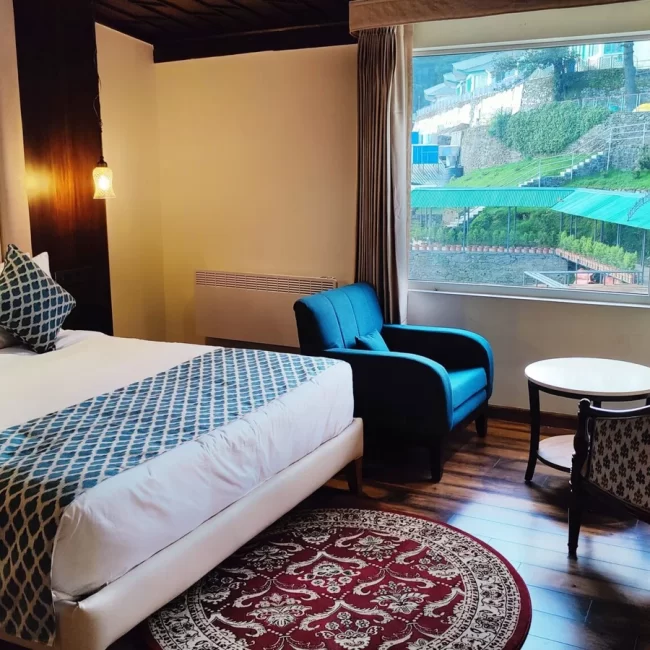
Luxury 5-star resort at 2,622 metres - the perfect base for exploring Shimla and Kufri. Mountain views, spa, restaurant and bonfire evenings.
Check Latest Price NowThe Monkeys of Jakhu - What You Need to Know
Jakhu Hill is home to a large and well-established population of rhesus macaques (Macaca mulatta) - the same bold, adaptable monkeys found throughout North India. At Jakhu, they have lived alongside pilgrims for centuries and are considered sacred by many devotees, meaning they have never been seriously deterred or relocated. The result is a population of macaques that are entirely unafraid of humans and thoroughly expert at opportunistic food theft.
The monkeys are fascinating to observe and can make for memorable wildlife photographs, but they require respect and sensible precautions. Follow these guidelines for a trouble-free visit:
- Zip all bags completely - macaques are dexterous enough to unzip partially open bags.
- Keep food inside closed backpacks - visible snacks, water bottles, and even sunglasses can attract attention.
- Do not feed the monkeys - it encourages aggressive behaviour toward subsequent visitors.
- Avoid direct eye contact - macaques interpret prolonged staring as a threat display.
- Do not try to recover stolen items - attempting to grab back a stolen snack can escalate into a bite. Let it go.
- Carry a stick or hire a guide - a walking stick is an effective deterrent and is cheaply available near the trailhead.
- Keep children close - young children should not hold food items in their hands at any point on the trail.
With sensible precautions in place, the monkeys are more entertaining than threatening. They can often be seen grooming each other in the temple courtyard, swinging through the forest canopy, or sitting on stone walls watching the steady stream of visitors with an air of dignified proprietorship. They are a genuinely memorable part of the Jakhu experience - just experience them on their terms, not yours.
Inside the Jakhu Temple Complex - What to See and Do
Once you reach the summit, the Jakhu Temple complex rewards careful exploration. The main sanctum houses the ancient idol of Lord Hanuman, and a queue system operates during busy periods to ensure every devotee gets a moment of darshan (sacred viewing) before the deity. Photography inside the inner sanctum is typically restricted - observe any signage posted by the temple priests and follow their direction respectfully.
The complex includes several subsidiary shrines, including smaller mandaps (pavilions) dedicated to other deities from the Hindu pantheon. Stone carvings and inscriptions on the older sections of the temple walls reflect centuries of patronage from Shimla's rulers, merchants, and devotees. The courtyard is large enough to accommodate several hundred worshippers during major festivals, particularly Hanuman Jayanti (celebrated in April) when the entire hilltop fills with pilgrims, music, and the scent of incense and marigold garlands.
Prasad (sacred food offering) is available from vendors in the temple complex and from the priests themselves. The traditional prasad at Jakhu typically includes laddoos - sweet balls made from gram flour, sugar, and ghee. Receiving prasad and offering it back to the deity is a deeply ingrained part of the temple visit ritual. If you are visiting for the first time, simply follow the lead of other devotees and the priests will guide you through the process.
The viewpoint terraces around the temple complex offer some of the finest panoramic views in Shimla. On clear days - most reliably in October-November after the monsoon, and again in February-March before the summer haze builds - you can see all the way to the Dhauladhar range and, in exceptional conditions, catch glimpses of peaks in Spiti and Kinnaur. Early morning visits before 9 AM offer the clearest skies and the fewest crowds, making them the optimal time for both photography and peaceful darshan.
Sunrise Photography at Jakhu - Tips for the Best Shots
Jakhu Hill sits at the highest point within Shimla town, making it arguably the best sunrise photography location in the entire city. Arriving at the temple just before first light - which in summer falls around 5:30 AM and in winter around 7:00 AM - puts you in position for golden hour light falling on the Hanuman statue, the forested ridgelines, and the first rays illuminating Shimla's colonial rooftops spread below.
Key compositions to attempt: the 33-metre statue with the valley lit in warm early light; the stone temple gateway (gopuram) framed against a pink and gold sky; candid devotee portraits in the soft morning light; and wide-angle shots from the summit viewpoint capturing the full sweep of Shimla's hills reaching toward the horizon. A telephoto lens or a phone with good zoom capability is useful for compressing the layers of ridges in the background.
Winter visits offer the added bonus of potential snow on the temple roof and surrounding trees, creating a serene and unusual composition. The monkeys are also somewhat less active in the cold early morning, meaning the temple precincts are calmer and more photogenic before the day's visitor traffic picks up. If you are serious about photography, plan a trek start at dawn and carry a small tripod for stable long-exposure shots in the low pre-sunrise light.
How to Reach Jakhu Temple from Kufri
Kufri is located approximately 11 kilometres from Jakhu Temple by road, making it a very convenient day trip from any resort or hotel in the Kufri area. The standard route from Kufri follows the main Shimla-Kufri highway into Shimla town, a drive of 25 to 35 minutes depending on traffic. Morning departures (before 9 AM) typically encounter less traffic on the approach roads into Shimla.
From Shimla town, you have two options to reach Jakhu:
- By trek: Park your vehicle at the designated parking area near the Ridge or at any of Shimla's paid parking lots, then walk to the trailhead near the All India Radio building on the Ridge. The 2.5 km trek takes 45-60 minutes uphill.
- By ropeway: From Scandal Point on Mall Road, board the Jakhu Ropeway gondola for a 6-minute aerial ride to the summit. This is the fastest option and eliminates parking complications entirely if you walk to Scandal Point from your vehicle.
Private vehicles are not permitted on the road to the Jakhu summit, so driving all the way to the temple is not an option. However, taxis from Kufri can drop you at the ropeway station or the trek trailhead, wait during your visit, and return you to Kufri afterward. Most hotels and resorts in Kufri - including Kufri Heritage Resort and Spa - can arrange this transport conveniently on request.
If you are planning to combine Jakhu Temple with other Shimla sightseeing, a logical full-day itinerary from Kufri might run: early morning drive to Shimla, Jakhu Temple visit (2-3 hours including trek and exploration), a walk along the historic Mall Road and Ridge, a visit to the Christ Church or Gaiety Theatre, lunch at a Mall Road restaurant, and then a leisurely afternoon drive back to Kufri in time for sunset from the resort.
Plan Your Shimla and Kufri Visit
Kufri Heritage Resort and Spa is the ideal base for all Shimla-area sightseeing - 13 km from Mall Road, with direct access to Kufri snow activities and Himalayan Nature Park.
Call for Best PriceFrequently Asked Questions
Q: Is Jakhu Temple open every day?
Yes, Jakhu Temple is open every day of the year, including public holidays and festivals. The temple welcomes devotees and visitors from 7:00 AM to 8:00 PM daily. Entry to the temple itself is free of charge, and there is no requirement to book in advance - you can simply arrive, join the queue for darshan, and explore the complex at your own pace.
Q: How long is the Jakhu Temple trek from Mall Road?
The trek from the Ridge (near Mall Road) to Jakhu Temple is approximately 2.5 kilometres one way, with an elevation gain of around 300 metres. A fit adult walking at a comfortable pace can complete the ascent in 45 to 60 minutes. The descent is faster, typically 30 to 40 minutes. The path is well-maintained and partially paved, though sturdy walking shoes are recommended as some sections are uneven.
Q: Are the monkeys at Jakhu Temple dangerous?
The rhesus macaques at Jakhu are bold and opportunistic rather than inherently dangerous, but they can bite if provoked or if food is involved. The key precautions are: keep all food inside fully zipped bags, do not attempt to feed or photograph them at close range with food in your hands, do not make prolonged eye contact, and do not try to reclaim anything they take. Carrying a stick - available cheaply near the trailhead - is an effective deterrent. With these precautions, the vast majority of visitors have a trouble-free experience.
Q: Can you drive directly to Jakhu Temple?
No, private vehicles are not permitted on the road leading to the Jakhu Temple summit. Visitors must either trek the 2.5 km path from the Ridge, or take the Jakhu Ropeway from near Scandal Point. Taxis and private cars can drop you at the ropeway station or the trek trailhead, but cannot proceed further up the hill. This restriction helps maintain the environment around the temple and keeps the forest path safe for trekkers.
Q: What is the Jakhu Ropeway cost in 2026?
The Jakhu Ropeway roundtrip fare is approximately Rs 250 to Rs 300 per adult. Children's tickets are available at a reduced rate. The ropeway operates during temple hours, covering the distance from Scandal Point to the Jakhu summit in approximately 6 minutes. Pricing can be subject to seasonal adjustment and revision by the operating authority, so it is advisable to check the current rates at the ticket counter on the day of your visit. Payment is typically accepted in cash and increasingly by UPI at the ticket window.
 Call Us
 WhatsApp