AT A GLANCE: SHIMLA VS MANALI 2026
| Shimla | Manali | |
| Distance from Delhi | 342 km | 7-8 hrs | 545 km | 10-12 hrs |
| Altitude | 2,205 m (Kufri: 2,622 m) | 2,050 m (Rohtang: 3,978 m) |
| Snow Season | Dec – Feb | Nov – Apr + year-round at Rohtang |
| Best For | Families, Heritage, Kufri Snow | Adventure, Long Stays, High Altitude |
| Overall Vibe | Colonial charm, easy access | Raw mountains, thrill-seeker base |
Every year, millions of travellers from Delhi, Chandigarh, and Punjab stare at the same question: Shimla or Manali? Both destinations sit inside Himachal Pradesh, both offer snow-dusted peaks, pine-scented air, and memories that outlast the drive home. Yet they deliver entirely different experiences. Shimla is colonial, refined, and closer – a weekend-friendly gateway where history walks alongside you on the Mall Road. Manali is wilder, longer to reach, and rewards those who have the time with glacier passes, river rapids, and an altitude that genuinely takes your breath away. This guide lays out every major factor – distance, snow, adventure, budget, family-friendliness, and more – so you can stop deliberating and start packing.
Distance and Accessibility: Why Shimla Wins for Most Travellers
The single biggest practical difference between Shimla and Manali is how long it takes to get there. From Delhi, Shimla is roughly 342 kilometres via NH-44 and the Kalka-Shimla Road. In good traffic, you are looking at seven to eight hours by car. The Kalka-Shimla toy train – a UNESCO World Heritage Railway – is another option, winding through 102 tunnels and 864 bridges across 96 kilometres of mountain track. It is slower, but it turns the journey itself into an attraction.
Manali sits 545 kilometres from Delhi, typically a ten to twelve hour drive. The Chandigarh to Manali stretch via Mandi is the most common route, but it involves more mountain curves, more altitude gain, and a significantly longer time behind the wheel. For families travelling with children or elderly members, that extra four hours each way can be genuinely tiring – and it adds time pressure to a short trip.
Kufri, just 13 kilometres above Shimla city at 2,622 metres, extends Shimla’s accessibility advantage even further. You can reach Delhi, check in at a 5-star resort in Kufri, and still have the evening free to sit by a bonfire with mountain views – all within the same day. That kind of efficiency is nearly impossible to replicate on a Manali run.
Verdict: Shimla wins on accessibility, particularly for weekend trips, families, and first-time Himachal visitors.
Snow Comparison: Manali Has the Longer Season, Kufri Delivers the Valley Experience
Snow is the number one reason most people visit either destination, and here the comparison gets nuanced. Manali’s snow season starts as early as November and stretches through April in the town itself. More importantly, Rohtang Pass at 3,978 metres often holds snow well into June and sometimes July – meaning a Manali trip in late spring can still deliver white peaks and snowy roadscapes that feel genuinely cinematic.
Shimla’s town receives its heaviest snowfall between late December and mid-February. That window is shorter. However, Kufri – perched 417 metres above Shimla – traps snow earlier and holds it longer than the city below. During peak winter (January and February), Kufri gets thick blankets that make it one of the premier snow destinations in Himachal outside of Manali. The Kufri Fun World adventure park even runs snow activities specifically calibrated for families who want a safe, accessible snow experience.
For those planning a March or April trip and prioritising snow above all else, Manali is the cleaner choice. For December to February, Kufri near Shimla offers comparable valley snow with a far shorter journey and better infrastructure for families and couples.
Verdict: Manali wins on snow season length and altitude range. Kufri bridges the gap significantly for winter travellers.
Skip the OTAs. Book direct with the resort.
Best rate guaranteed. Complimentary breakfast for direct bookings.
Adventure Activities: Manali Leads, Shimla Holds Its Own
If adrenaline is your primary currency, Manali has the richer menu. Solang Valley (2,480 m) offers paragliding, zorbing, and skiing in winter, all within easy reach of the town. Rohtang Pass gives access to high-altitude snowmobiling and is a jumping-off point for serious trekkers heading toward Lahaul and Spiti. River rafting on the Beas between Pirdi and Jhiri is one of the most popular white-water runs in North India, with rapids graded between II and IV depending on the season. For those with more time, the Manali-Leh Highway – one of the world’s highest motorable roads – starts here and is a bucket-list experience in its own right.
Shimla is not without its adventure credentials. Kufri has been operating ski slopes since the 1950s and hosts the annual Kufri Winter Sports Festival. The Himalayan Nature Park in Kufri is home to snow leopards, Himalayan bears, and barking deer – a genuine wildlife attraction rather than a novelty zoo. Horse riding up to Mahasu Peak offers panoramic views that rival anything in Manali. Chail, roughly 45 kilometres from Kufri, holds the world’s highest cricket ground and its own wildlife sanctuary.
Trekking from Shimla covers routes to Hatu Peak, Shali Tibba, and the Chanshal Pass – less famous than Manali’s trails, but genuinely rewarding with fewer crowds. For a shorter trip where adventure is one component among several, Shimla-Kufri delivers excellent variety.
Verdict: Manali wins on raw adventure volume, especially for multi-day treks and high-altitude sports. Shimla-Kufri is well rounded and less crowded.
Heritage, Culture, and Colonial Charm: Shimla is in a Different League
No hill station in India matches Shimla’s historical weight. As the summer capital of British India from 1864 onwards, Shimla accumulated an extraordinary collection of colonial architecture that still defines the skyline today. The Viceregal Lodge – now the Indian Institute of Advanced Study – is a Scottish baronial building where multiple partition-era negotiations took place. Christ Church on the Ridge is one of the finest examples of neo-Gothic architecture in Asia, built in 1857 and still in active use. The Gaiety Theatre, opened in 1887, continues to host cultural performances in a venue that once entertained British officers and Maharajas alike.
Walking Shimla’s Mall Road is a stroll through layered history. The traffic-free promenade connects Scandal Point to the Lift, passing Tudor facades, Victorian lamp posts, and buildings that feel largely unchanged from the Raj era. The Jakhu Temple, dedicated to Lord Hanuman and perched at 2,455 metres, is both a religious landmark and a viewpoint offering 360-degree Himalayan panoramas.
Manali has its own cultural texture. Old Manali village retains a quieter, pre-tourism character, and the Hadimba Devi Temple – a wooden pagoda structure from 1553 surrounded by ancient deodar forest – is architecturally striking. The Tibetan monasteries around Manali reflect the influence of the Rohtang corridor as a historic trade route. But in terms of sheer historical depth and architectural heritage, Manali cannot compete with Shimla.
Verdict: Shimla wins on heritage, culture, and colonial architecture – decisively.
Stay at Kufri Heritage Resort and Spa
5-star luxury at 2,622 metres – your perfect Shimla-Kufri base. Spa, restaurant, mountain views and bonfire evenings.
Check Latest Price NowFamily Travel vs Couples: Which Destination Suits You Better?
Families with children will almost always have a smoother trip to Shimla and Kufri. The drive is shorter, the altitude gain is gentler (reducing the chance of altitude sickness in young children), and the activities are purpose-built for families. Kufri Fun World has snow slides, giant wheels, and horse rides that children love. The Himalayan Nature Park in Kufri is a rare opportunity to see Himalayan fauna up close without venturing deep into the wilderness. Shimla city itself is walkable, largely traffic-free on the upper promenade, and packed with bakeries, toy shops, and ice cream stalls that make a family afternoon genuinely pleasant.
Manali with children is absolutely doable – and many families do it – but the longer drive, higher altitude, and more rugged terrain demand more preparation. Children under five and elderly travellers can be more susceptible to altitude discomfort at Rohtang Pass’s near-4,000-metre elevation. If your itinerary keeps you in Manali town and Solang Valley without ascending to Rohtang, the risk drops considerably.
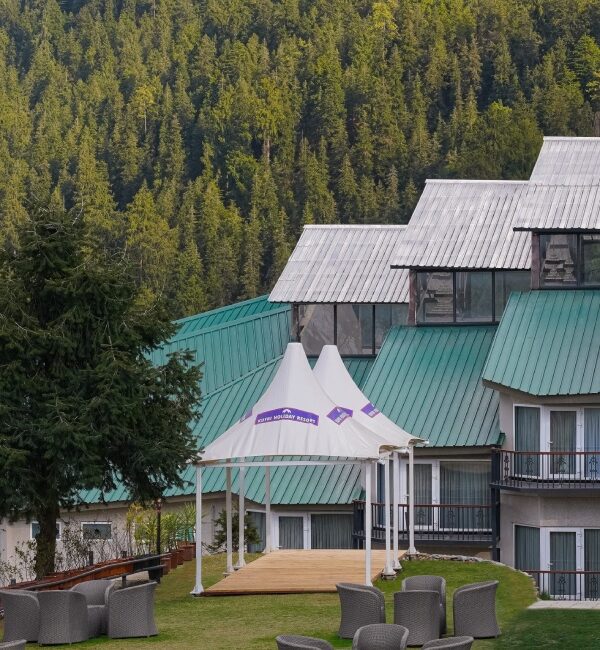
Couples find both destinations genuinely romantic, but in different ways. Shimla and Kufri offer heritage bungalows, spa retreats, candlelit dinners in colonial dining rooms, and misty mountain mornings that feel pulled from an old Bollywood film. A stay at a resort like Kufri Heritage Resort and Spa – with its spa facilities, mountain-view suites, restaurant, and bonfire setups – provides the kind of curated intimacy that couples on a short break want without spending days in a car.
Manali’s romance is more raw and untamed. Riverside resorts along the Beas, bonfires surrounded by pine forests, and the dramatic scenery of Solang Valley create a different mood entirely – one that suits couples who prefer adventure as their shared language. A four or five night Manali stay gives time to explore that mood properly.
Verdict: Shimla-Kufri wins for families and short-stay couples. Manali wins for adventurous couples with four or more nights available.
Budget Comparison and the Combined Circuit Option
Budget: Manali runs approximately 20 to 30 percent cheaper than Shimla for mid-range and budget accommodation. The town has a wider spread of guesthouses and homestays catering to backpackers and budget travellers, and food costs are generally lower outside the tourist-facing restaurants. Shimla’s status as a more accessible weekend destination from Delhi and Chandigarh keeps hotel prices elevated, especially during peak winter and summer seasons. That said, at the luxury end of the market – five-star resorts and heritage properties – the price gap narrows considerably, and value-for-money favours the property with the better view and better service regardless of location.
The Combined Circuit – Shimla First, Then Manali: For travellers with seven to ten days, the classic Himachal circuit starts in Shimla, explores Kufri and Chail, then continues via Rampur and Kullu toward Manali. This route follows the Sutlej and Beas river valleys, passing through some of the most scenic terrain in North India. Rampur’s apple orchards and the Kinnaur backdrop visible from the highway add dimension to what would otherwise be a point-to-point drive. Reaching Manali this way takes roughly eight hours from Shimla but feels like continuous discovery rather than a long slog.
Doing this circuit in reverse – Manali first, Shimla last – also works well, particularly if you want to end your holiday with Shimla’s colonial comforts and easier onward connections. Both directions give you the full Himachal experience in a single trip.
Verdict: Budget-conscious travellers save more in Manali. Combined-circuit travellers get the best of both and should plan for a minimum of seven nights.
Plan Your Shimla and Kufri Stay
Kufri Heritage Resort and Spa – 13 km from Shimla, direct access to all attractions. 5-star comfort with Himalayan views.
Call for Best PriceFrequently Asked Questions: Shimla vs Manali 2026
Which has more snow – Shimla or Manali?
Manali has a longer snow season, typically running from November through April in the town, with Rohtang Pass holding snow even longer. Shimla’s peak snowfall is concentrated in January and February. However, Kufri – just 13 km above Shimla at 2,622 metres – receives heavy snowfall in winter that is fully comparable to what you would experience in Manali town. If you are visiting between December and February, either destination delivers excellent snow. For March, April, or early May, Manali and Rohtang are the clear choice.
Is Shimla or Manali cheaper?
Manali is generally 20 to 30 percent cheaper than Shimla for accommodation and food, particularly in the mid-range and budget segments. Shimla’s accessibility from Delhi and Chandigarh keeps demand – and prices – consistently high. That said, the cost difference shrinks significantly at the luxury level, where both destinations have premium properties. Factor in fuel and tolls for the extra 200-plus kilometres to Manali when comparing total trip costs.
Which is better for first-time Himachal visitors?
Shimla is the recommended starting point for first-timers. The shorter drive, gentler altitude, and rich mix of colonial heritage, mountain scenery, and family activities make it easier to experience Himachal without logistical complexity. You can do Shimla and Kufri meaningfully in three to four days, which fits neatly into a long weekend. Manali rewards those who have already seen Shimla and want to push further into the mountains.
Which is better for couples?
Both destinations are romantic, but they offer different kinds of romance. Shimla and Kufri suit couples who want heritage surroundings, spa facilities, candlelit dinners, and a relaxed pace – especially on a three to four night break. Manali suits couples who want dramatic mountain scenery, river views, and shared adventure as the backdrop for their trip. For a luxury couple’s retreat without a long drive, Kufri Heritage Resort and Spa at 2,622 metres is a strong choice.
Can I do both Shimla and Manali in one trip?
Yes – the Shimla to Manali circuit via Rampur is a classic Himachal route that most experienced travellers recommend. You would need a minimum of seven nights to do both destinations justice without feeling rushed. The drive between Shimla and Manali takes roughly seven to eight hours and passes through spectacular scenery along the Sutlej and Beas valleys. Many travellers start in Shimla, spend two to three nights in Kufri, then continue to Manali for three to four nights before returning via Chandigarh.
Ready to experience Kufri Heritage?
Talk to the resort directly. Real rates, an answer within the hour, no booking fees.