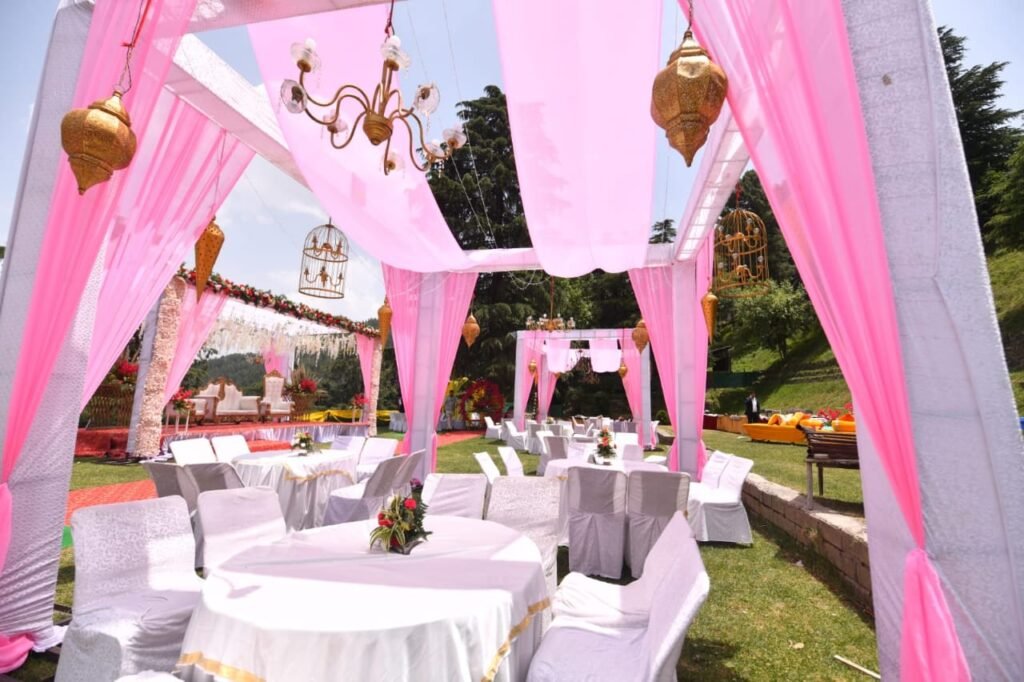
The best season for a destination wedding in Shimla depends on your ceremony plan, guest access and a workable indoor alternative. Select a shortlist of dates only after checking how the entire event would operate if the preferred outdoor setup could not be used. No month guarantees snowfall, clear skies or an uninterrupted journey. A venue proposal should explain the practical plan for your chosen dates.
Choose the event format before the month
List each function, its expected guest count and whether it must happen outdoors. Separate the number of resident guests from the maximum event attendance. This gives the venue the information needed to assess accommodation and function space without using one vague total. Start a wedding venue enquiry.
For each ceremony, record the setup time, service needs and preferred start time. Ask how the room or outdoor area would be prepared, reset and shared between events. A beautiful location is only one part of a functioning multi-event celebration.
Use seasons as planning context
Himachal Tourism describes winters as cold, spring and autumn as moderate, and summers as mildly warm in Shimla. That is useful general context, not a forecast for your wedding date. Check current official advice and discuss seasonal operating arrangements with the property.
For a winter date, ask how guest movement, heating and outdoor waiting would be managed. For a date where rain is a concern, ask about covered access and indoor changeovers. For any season, review the real layout rather than assuming that a temporary cover or a nearby room is an adequate substitute.
Confirm a usable indoor alternative
Request the backup space’s capacity for your actual seating layout, along with photographs or a walkthrough. Clarify whether it can accommodate the ceremony, food service and supplier equipment together. Capacity for a different event style is not a substitute for that assessment.
Ask who decides when the backup plan is activated, when setup must begin and whether extra hire or decoration costs arise. Confirm that the alternative space is reserved for your event rather than merely available if nobody else books it. Review accommodation categories.
Match guest accommodation to the date shortlist
Ask for a rooming proposal covering arrival batches, room categories, extra beds and accessible routes where needed. Confirm check-in and checkout arrangements around each function. Do not assume that a guest who arrives before a ceremony can enter a room immediately. Build the wedding cost brief.
If some guests stay elsewhere, decide how transfers, waiting areas and luggage are handled. Share access needs early and ask the property to confirm what it can accommodate. Avoid booking transport around an unverified fixed travel time.
Compare dates with the same commercial brief
Send the same function schedule, guest counts, rooms, meals and setup requirements for each date option. Request a final quotation separating accommodation, venue hire, catering and optional supplier services. This shows whether a lower date quote excludes something important.
Obtain payment milestones, guest-count deadlines, supplier rules and date-change conditions before choosing. Your enquiry can say: “Please assess these dates for our event brief, including a reserved indoor alternative and the full accommodation plan.” Make the final decision on the confirmed operational and commercial proposal, not a promise of ideal weather.