AT A GLANCE: LOCAL FOOD IN SHIMLA 2026
| Must-Try Dishes | Siddu, Chha Gosht, Babru, Tudkiya Bhath, Aktori, Madra |
| Best Street Food Areas | Mall Road and Lakkar Bazaar |
| Budget Meal Cost | Rs 100-250 at a local dhaba |
| Fine Dining Options | Kufri Heritage Resort restaurant and heritage hotels |
| Traditional Feast | Dham – served on leaf plates at festivals and weddings |
| Best Time to Eat Local | Year-round | seasonal specials in winter (Nov-Feb) |
Shimla sits at over 2,200 metres in the Himalayas and its food is every bit as distinctive as its mountain landscape. Himachali cuisine draws on centuries of hill-culture tradition – warming, deeply spiced, and built around ingredients that thrive in high-altitude conditions like buckwheat, poppy seeds, chickpeas, and slow-cooked lamb. Visitors who come to Shimla for its colonial architecture and pine-forest views often leave talking most about the food.
Whether you are grabbing a hot Babru from a Lakkar Bazaar stall or sitting down to a full Dham spread at a heritage property, local food in Shimla in 2026 is more accessible and celebrated than ever. This guide covers every major Himachali dish you should try, where to find the best versions of each, and practical tips that will help you eat like a local from day one of your trip.
Traditional Himachali Cuisine: An Overview
Himachali cooking reflects the geography and seasons of the western Himalayas. The cuisine evolved to fuel mountain communities through long, cold winters, which means generous use of fats, whole grains, legumes, and slow-cooked meats. Spice profiles lean toward warming flavors – cardamom, dried coriander, red chili, ginger, and asafoetida are pantry staples in almost every Shimla household.
What sets Himachali food apart from the broader North Indian culinary tradition is its restraint with tomatoes and onions in many dishes, its reliance on yoghurt-based gravies, and its celebration of fermented and steamed preparations. The mountains were not always a place of abundance, and traditional recipes reflect clever use of every ingredient available at altitude.
Cooking methods are as important as ingredients. Steaming, slow-simmering in mustard oil or ghee, and pan-roasting over wood fires are all common. In many mountain villages, food is still cooked in iron kadais over wood-fueled hearths, which lends a faintly smoky depth to even simple preparations.
The food also has a strong ritual dimension. The Dham – a multi-course vegetarian feast served on leaf plates – is central to every major celebration in Himachal Pradesh, from weddings to harvest festivals. Eating a proper Dham is one of the most authentic culinary experiences available to visitors, and some heritage properties and local caterers now offer Dham experiences to tourists on request.
Related Reading
The Six Must-Try Himachali Dishes in Shimla
Siddu: The Most Iconic Dish from Shimla
If you eat only one thing in Shimla, make it Siddu. This steamed bread is made from fermented wheat dough and stuffed with a filling of roasted poppy seeds mixed with walnuts, ghee, and sometimes a pinch of sugar. The dough is left to ferment overnight, which gives Siddu its characteristic slightly sour, light texture that is quite unlike any other Indian bread.
Siddu is served warm, ideally with a generous pour of pure ghee on top, alongside a bowl of dal or a mutton gravy. The combination of the soft, steamed bread and the nutty, rich filling makes it immediately addictive. You will find Siddu sold at dhabas throughout Shimla and at street stalls near Lakkar Bazaar, particularly in the morning and at lunchtime. Eating it fresh and hot is the only way – it does not travel or reheat well.
Chha Gosht: Slow-Cooked Marinated Lamb
Chha Gosht is the signature meat dish of Himachal Pradesh and the version served in Shimla’s better restaurants is exceptional. Bone-in lamb is marinated for several hours in a paste of gram flour, yoghurt, and a blend of whole spices including black cardamom, cloves, and dried red chili. The marinated meat is then slow-cooked in mustard oil until the sauce reduces to a thick, clingy gravy that coats every piece.
The gram flour gives the gravy an unusual texture and a faintly nutty undertone that separates Chha Gosht from standard North Indian lamb curries. It is rich, deeply savory, and best eaten with steamed rice or a plain paratha. Most Shimla restaurants that serve Himachali food will have Chha Gosht on the menu for lunch and dinner.
Babru: Black Bean Kachori Street Food
Babru is Shimla’s answer to the kachori – a deep-fried flatbread stuffed with soaked and ground black urad dal (split black lentils). The filling is seasoned with asafoetida, cumin, and green chili before being sealed inside the dough and fried until golden and crisp. Babru puffs up during frying, creating a hollow, flaky crust around the spiced lentil filling.
It is emphatically street food, served with a tangy tamarind chutney and sometimes a cup of khatta (a sour chickpea water preparation). Mall Road and Lakkar Bazaar are the best places to find Babru vendors, especially in the late morning. At Rs 20-40 per piece, it is one of the most affordable and satisfying snacks in the city.
Tudkiya Bhath: Himachali Spiced Rice
Tudkiya Bhath is Himachal Pradesh’s version of a spiced rice preparation, and it is considerably more complex than it might first appear. Long-grain rice is cooked with whole spices, lentils, potatoes, and yoghurt in a single vessel, creating a dish that sits somewhere between a biriyani and a dal khichdi but belongs firmly to neither category.
The distinguishing characteristic is the layering of flavors from the slow-cooked lentils and the slight tang of the yoghurt, balanced by the sweetness of caramelized onion and the heat of dried chilies. Tudkiya Bhath is a staple at the Dham feast and is also served as a standalone main course in many local restaurants. It is satisfying, warming, and an excellent introduction to the rice-based side of Himachali cooking.
Aktori: Buckwheat Pancakes from the Mountains
Aktori is a seasonal dish that deserves far more attention than it typically receives from visitors. These thin pancakes are made from buckwheat flour – a crop that grows well at high altitude where wheat struggles – mixed with water or buttermilk and cooked on a hot iron tawa. The result is a slightly earthy, nutty pancake that is crisp at the edges and soft in the center.
Aktori is traditionally eaten during festivals and the winter months when buckwheat is freshly harvested. It is typically served with ghee and local honey, or alongside a simple yoghurt chutney. Buckwheat is naturally gluten-free, which makes Aktori one of the few traditional Himachali dishes that works for visitors with gluten sensitivities. Finding Aktori requires seeking out the more traditional dhabas or specifically requesting it – it is not always on printed menus.
Madra: Chickpeas in Yoghurt Gravy
Madra is the great vegetarian centerpiece of Himachali cooking and a non-negotiable part of any traditional Dham. Chickpeas are slow-cooked in a yoghurt-based gravy that is tempered with ghee, cloves, cardamom, cinnamon, and bay leaves. The chickpeas absorb the spiced yoghurt over a long, gentle cooking time, becoming extraordinarily tender and deeply flavored.
There are regional variations across Himachal Pradesh – some versions use kidney beans or lotus seeds instead of chickpeas – but the Shimla preparation with kabuli chana (white chickpeas) is the most widely available. Madra is served as a side dish alongside rice and dal in a Dham setting, but you can also order it as a standalone preparation at most Himachali restaurants in the city.
Ask the resort about your dates and room needs.
Check current room options and inclusions directly with the resort.
The Dham: Understanding Himachal’s Traditional Feast
No food guide to Shimla is complete without a dedicated discussion of the Dham. The word refers both to the feast itself and the concept of communal eating in Himachali culture. A proper Dham is entirely vegetarian, prepared exclusively by a caste of traditional cooks called Botis, and served on leaf plates to guests seated on the floor or on low wooden planks.
The courses of a Dham follow a specific sequence that has remained largely unchanged for centuries. The meal typically begins with rice, then moves through Madra (the yoghurt chickpea preparation), a sweet preparation made from boondi or rice, Khatta (a sour sauce made from tamarind or dried mango), and Mitha Bhath (sweet rice). The sequence moves from savory to sour to sweet in a pattern that is said to aid digestion and signal auspiciousness.
Dham is traditionally prepared outdoors in large iron vessels over wood fires, and the smoke and slow cooking are considered integral to the flavor. Weddings, birth ceremonies, village fairs, and religious festivals all feature a Dham, and in smaller Himachali towns it remains the primary context in which people eat together in large groups.
For visitors to Shimla, experiencing a Dham is possible through a few routes. Some heritage properties can arrange a traditional Dham experience with advance notice. Local cultural organizations and home-stay hosts in the villages surrounding Shimla occasionally host Dham meals for small groups of tourists. If you are in Shimla during a major festival period, you may encounter a community Dham that welcomes visitors with appropriate decorum and permission from the hosts.
Where to Eat in Shimla: Best Restaurants and Street Food Spots
Mall Road and Lakkar Bazaar: Street Food Central
Mall Road is the spine of Shimla and its surrounding lanes are the best concentration of street food in the city. The stretch from Scandal Point down toward Lakkar Bazaar is lined with vendors selling Babru, hot corn on the cob, roasted peanuts, and seasonal snacks throughout the day. In the morning, look for stalls offering Siddu and Aktori alongside cups of thick ginger chai.
Lakkar Bazaar – the timber market just above Mall Road – has a more local character and prices are noticeably lower than on the main promenade. This is where Shimla residents themselves eat when they want a quick, affordable meal. Budget Rs 100-250 for a full street meal here, including snacks and chai.
Indian Coffee House, Shimla
The Indian Coffee House on Mall Road is a Shimla institution that has been serving the city since the 1950s. The decor is charmingly unchanged, the waiters wear their distinctive fan-topped turbans, and the menu combines South Indian filter coffee and breakfast items with a small selection of North Indian snacks. It is not a Himachali food specialist, but its dosas, omelettes, and mutton cutlets are genuinely good, the prices are among the lowest on Mall Road, and the atmosphere is irreplaceable. No serious Shimla visit is complete without at least one long coffee here while watching the mountain light change outside the windows.
Ashiana and Goofa: HPTDC Restaurants
The Himachal Pradesh Tourism Development Corporation operates two well-regarded restaurants on Mall Road – Ashiana and the adjacent Goofa. Both serve a broad menu that includes North Indian, Chinese, and Himachali dishes. Ashiana is the more formal of the two, with a terrace that offers excellent views over the Shimla rooftops. The HPTDC properties are reliable for consistent quality, reasonable prices, and a clean, comfortable dining environment that works well for families and groups. The Himachali thali at Ashiana is a good introduction to the breadth of the local cuisine in a single sitting.
Wake and Bake Cafe
Wake and Bake Cafe has developed a loyal following among younger visitors and the resident population of Shimla for its relaxed atmosphere, reliable coffee, and a menu that balances cafe staples with locally inspired dishes. It is a good choice for breakfast and midday meals. The cafe is particularly popular during the apple season (September-October) when local seasonal produce appears on the menu in various forms.
Kufri Heritage Resort Restaurant: Fine Dining Near Shimla
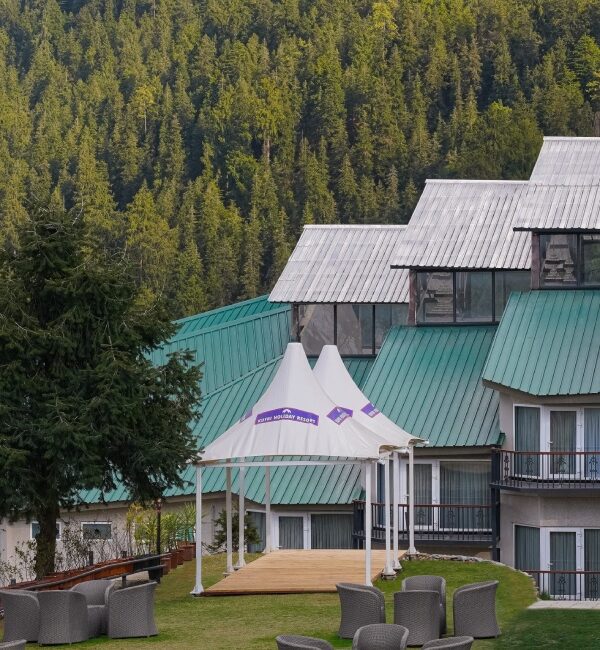
For the finest dining experience in the Shimla-Kufri corridor, the restaurant at Kufri Heritage Resort and Spa offers both Himachali specialties and broader Indian cuisine in a setting that matches the quality of the food. Positioned at 2,622 metres on the outskirts of Kufri – 13 km from Shimla – the resort restaurant sources ingredients locally where possible and prepares traditional Himachali dishes with the same attention given to the rest of the property’s five-star hospitality.
Guests staying at the resort have the advantage of eating Dham-inspired menus, fresh mountain breakfasts, and evening meals beside a bonfire in one of the most dramatic natural settings in the region. Day visitors can call ahead to reserve a table. For a special occasion dinner or a proper fine-dining experience of Himachali cuisine, the Kufri Heritage Resort restaurant is the benchmark in this part of the mountains.
Stay at Kufri Heritage Resort and Spa
5-star luxury at 2,622 metres – 13 km from Shimla. Spa, restaurant, mountain views and bonfire evenings.
Check Latest Price NowLocal Sweets and Snacks You Should Not Miss
Himachali sweet-making is a distinct craft that sits alongside the savory food tradition without overshadowing it. Several sweets are specific to the region and worth seeking out during any Shimla visit.
Mittha is a sweet rice preparation flavored with saffron, dried fruits, and ghee that appears at the end of a Dham feast. It is not commonly sold commercially but can sometimes be found at Shimla’s older sweet shops, particularly during festival seasons. The combination of fragrant saffron and the richness of ghee makes it one of the most distinctive desserts in the Himachali canon.
Patande are thin sweet pancakes made from refined flour, sugar, and cardamom that are typically prepared for celebrations. They are delicate, slightly crispy at the edges, and fragrant with the cardamom. Some dhabas and sweet shops in the older parts of Shimla still make Patande to order, particularly on request.
Kullu Trout deserves a mention here even though it is not a sweet – it is one of Himachal Pradesh’s finest ingredients. River trout from the Kullu valley is available in Shimla at select restaurants and is worth ordering whenever it appears on a menu. Pan-fried with minimal spicing, it showcases the quality of the mountain waterways and is a completely different experience from the farmed fish available elsewhere in North India.
For snacking between meals, the roasted nuts and dried fruits sold in the markets around Shimla are excellent – walnuts, almonds, and dried apricots all come from the wider Himachal Pradesh region and are sold in fresher condition here than almost anywhere else in India.
Practical Tips for Eating Well in Shimla in 2026
Go early for street food. The best Siddu and Babru vendors sell out by mid-morning. If you want the freshest preparations, aim to be at Lakkar Bazaar or near the lower end of Mall Road by 9:00-10:00 AM.
Ask for the Himachali menu. Many restaurants in Shimla have a standard North Indian menu for tourists and a shorter, more authentic Himachali menu that they do not always advertise. Simply asking for local specialties or Himachali dishes will usually produce a more interesting list of options.
Budget meals are genuinely available. Rs 100-250 will cover a substantial meal at any of the good dhabas in the Lakkar Bazaar area or the lower slopes of the bazaar. Do not let the tourist pricing on Mall Road itself suggest that affordable eating is impossible – it is plentiful, you just need to walk one or two streets off the main promenade.
Vegetarians eat very well here. Himachali cuisine has a strong vegetarian tradition built around the Dham feast, and dishes like Madra, Tudkiya Bhath, Aktori, and Babru mean that vegetarians have access to the most authentic and interesting parts of the local food culture without compromise.
Mustard oil is the traditional cooking fat. If you are unaccustomed to mustard oil, the flavor can be strong in some preparations. It is worth trying – the slightly pungent, peppery quality of mustard oil is integral to authentic Himachali flavor – but if it is too intense, ghee-based preparations are widely available and equally traditional.
Pair food with local beverages. Himachali apple cider and locally produced fruit wines are increasingly available in Shimla restaurants. The apple orchards of Himachal Pradesh are among the finest in Asia, and the cider and wines they produce are a natural complement to the rich, spiced food of the region.
Plan Your Shimla and Kufri Trip
Kufri Heritage Resort and Spa – the ideal base for all Shimla-area sightseeing and Kufri activities.
Call for Best PriceFrequently Asked Questions: Local Food in Shimla 2026
What is the most famous food in Shimla?
Siddu is widely considered the most iconic dish from Shimla and the broader Himachal Pradesh region. This steamed bread made from fermented wheat dough and stuffed with poppy seeds, walnuts, and ghee is served at dhabas, street stalls, and restaurants throughout the city. It is the one dish that locals and visitors alike associate most strongly with Shimla’s food identity.
Where can I find the cheapest meal in Shimla?
The dhabas and small eateries in and around Lakkar Bazaar offer the most affordable meals in Shimla, typically Rs 100-250 for a filling plate of rice, dal, and a vegetable preparation. Street food near Mall Road – Babru, roasted corn, and hot peanuts – is available for Rs 20-60 per item. Walking one or two streets off the main Mall Road promenade will consistently bring prices down significantly compared to the tourist-facing restaurants on the main strip.
Is Shimla good for vegetarian food?
Shimla is an excellent destination for vegetarians. The Himachali cuisine tradition has a strong vegetarian backbone centered on the Dham feast, which is entirely meat-free. Dishes like Madra (yoghurt chickpeas), Tudkiya Bhath (spiced rice with lentils), Aktori (buckwheat pancakes), and Babru (black lentil fried bread) represent some of the most interesting and authentic food in the region and all are vegetarian. Most restaurants also serve a wide range of standard North Indian vegetarian dishes alongside local specialties.
What is the best restaurant on Mall Road Shimla?
The HPTDC-operated Ashiana restaurant is consistently regarded as one of the best options on Mall Road for a sit-down meal, offering good Himachali thali options alongside a broader menu at reasonable prices. For the most authentic and upscale Himachali dining experience in the wider Shimla area, the restaurant at Kufri Heritage Resort and Spa – 13 km from Shimla in Kufri – is the top recommendation for visitors who want fine dining quality with genuine mountain ambiance.
What local sweets should I try in Shimla?
Mittha – a saffron and ghee sweet rice preparation – is the most distinctly Himachali dessert and is worth seeking out at older sweet shops during festival periods. Patande (thin cardamom-scented sweet pancakes) are another local specialty worth trying. More widely available are the excellent dried fruits, fresh walnuts, and locally produced apple products including cider and fruit preserves that make ideal edible souvenirs from any Shimla visit.
Ready to experience Kufri?
Talk to the resort directly to check current availability for your dates.