The best places to visit in Himachal Pradesh span six distinct zones: the Shimla-Kufri belt, the Kullu-Manali valley, Dharamshala and McLeod Ganj, Spiti Valley, Kinnaur, and Dalhousie-Chamba. Each zone offers a different altitude, landscape, and experience. For most first-time visitors from Delhi, the Shimla-Kufri belt is the most accessible starting point, with Kufri at 2,622 metres as the highest and most rewarding stop in the zone.
AT A GLANCE: Places to Visit in Himachal Pradesh
| Closest to Delhi | Kasauli (280 km), Shimla (345 km), Kufri (360 km) |
| Highest Accessible Town | Kaza in Spiti (3,800m) for the adventurous |
| Best for Snowfall | Kufri (2,622m) , 360 km from Delhi, accessible all year |
| Best for Adventure | Manali, Spiti, Bir Billing (paragliding capital) |
| Best for Couples | Shimla, Kufri, Manali, Dharamshala |
| Best for Families | Shimla, Kufri (Nature Park, activities), Manali |
| State Capital | Shimla , 2,205 metres, former British summer capital of India |
Zone 1: Shimla and Kufri Belt
Why is the Shimla-Kufri belt the best starting point in Himachal Pradesh?
The Shimla-Kufri belt is the most accessible zone in Himachal for first-time visitors and offers the widest range of experiences within a compact geography. Shimla city (2,205m) has the colonial architecture (Mall Road, Christ Church, Viceregal Lodge), the Ridge promenade, and the Jakhu Temple (2,455m). Kufri (2,622m, 13 km from Shimla) adds the Himalayan Nature Park (90-hectare wildlife reserve), Mahasu Peak (2,890m), and skiing and snow activities in winter. The Hindustan-Tibet Highway (NH-5) from Shimla continues to Fagu (22 km), Narkanda (65 km), and eventually Kinnaur, making the Shimla-Kufri base a gateway to deeper Himachal as well. The zone is 345 to 360 km from Delhi, accessible by road in 7 to 9 hours.
What are the must-visit places in the Shimla belt?
Shimla’s Mall Road and the Ridge for colonial architecture and Himalayan views. Jakhu Temple (2,455m) for the deodar forest trail and langur monkeys. Kufri plateau (2,622m) for the Himalayan Nature Park wildlife, Mahasu Peak panorama, and snow activities. Chail (45 km from Shimla) for the Chail Palace grounds and the highest cricket ground in the world. Narkanda (65 km) for the Hatu Peak viewpoint and the most developed apple orchard landscape in the belt. Fagu (22 km) for quiet apple orchard scenery and the most peaceful stop on the Shimla-Narkanda highway. Naldehra (23 km) for a golf course at altitude and quiet forest walks.
Zone 2: Kullu and Manali
What are the best places to visit in Kullu and Manali?
Manali (2,050m) is 570 km from Delhi and the second most visited destination in Himachal. The old Manali village, Hadimba Temple, Solang Valley (paragliding, snow activities, 2,480m), Rohtang Pass (3,978m, subject to seasonal permit restrictions), and the Beas River camping zone are the primary attractions. Kullu town (1,200m), 40 km south of Manali, is known for the Great Himalayan National Park, river rafting on the Beas, and the Kullu Dussehra festival (October). The Kullu-Manali belt is best for adventure travellers: rafting, paragliding, trekking to Pin Parvati and the Hampta Pass, and the access gateway to Spiti Valley via Rohtang. Snow in winter at Solang Valley and the Rohtang corridor is heavier than Kufri but the road is more difficult.
Ask the resort about your dates and room needs.
Check current room options and inclusions directly with the resort.
Zone 3: Dharamshala and McLeod Ganj
What makes Dharamshala and McLeod Ganj worth visiting in Himachal?
Dharamshala (1,457m) and McLeod Ganj (1,457m, 5 km above Dharamshala) are the home of the Tibetan government-in-exile and the Dalai Lama’s residence. McLeod Ganj has a distinctive Tibetan Buddhist cultural character unlike anywhere else in India: monasteries, Tibetan restaurants, meditation centres, and a strong international community of travellers. The Bhagsu waterfall, the Triund Trek (2,875m, one of the most popular day treks in the state), and the Kangra Valley views from the ridge are the natural highlights. Dharamshala is 480 km from Delhi and 250 km from Chandigarh. It is the best destination in Himachal for a longer cultural and spiritual stay but requires more travel time than the Shimla belt for a weekend trip from Delhi.
Zone 4: Spiti Valley
What is Spiti Valley and who should visit it?
Spiti Valley is a high-altitude cold desert at an average elevation of 3,800 metres, accessible from Shimla via Kinnaur or from Manali via Rohtang Pass. Key places in Spiti include Kaza (the administrative centre), Key Monastery (4,166m), Kibber village (4,270m , one of the highest permanently inhabited villages in the world), and Chandratal Lake (4,300m). Spiti is for experienced mountain travellers who are comfortable with high altitude, limited accommodation, no ATMs beyond Kaza, and roads that require jeeps or SUVs. The landscape is barren, dramatic, and unlike anything else in India , moonscape valleys, ancient Buddhist monasteries, and a sky that at 4,000m appears closer and darker blue than anywhere on the plains. Spiti is inaccessible in winter from both sides.
Zone 5: Kinnaur
What is Kinnaur known for in Himachal Pradesh?
Kinnaur district follows the Sutlej River east from Shimla toward the Tibet border on the Hindustan-Tibet Highway (the same NH-5 that passes through Kufri). Key stops include Sarahan (Bhimakali Temple, 2,165m), Sangla Valley (2,680m, apple orchards and the Baspa River), Kalpa (2,960m, with close-range views of Kinnaur Kailash), and Chitkul (3,450m, the last Indian village before the Tibet border). Kinnaur combines Tibetan Buddhist cultural elements with Hindu traditions in a unique syncretic mountain culture. The road from Shimla to Chitkul via Kufri takes 8 to 10 hours by jeep. The best season is May to October; the road is dangerous in monsoon and closed in winter.
Zone 6: Dalhousie and Chamba
Why visit Dalhousie in Himachal Pradesh?
Dalhousie (2,036m) is a lesser-known hill station in the Chamba district of western Himachal, 550 km from Delhi. It has the quietest colonial-era character of any hill station in the state , far less tourist infrastructure than Shimla or Manali, older buildings, and a gentler pace. Khajjiar (2,000m, 22 km from Dalhousie), known as the “mini Switzerland of India” for its circular meadow with a lake surrounded by cedar forest, is the area’s primary attraction. Chamba town (1,006m) lower in the Ravi valley has ancient Hindu temples dating to the 10th century. Dalhousie suits travellers looking for a peaceful, off-the-beaten-track hill station without the commercialisation of Shimla or Manali.
Planning a Himachal Pradesh Trip
What is the best itinerary for a first-time visitor to Himachal Pradesh?
For a first visit of 5 to 7 days from Delhi, the Shimla-Kufri-Narkanda circuit is the practical choice. Days 1 to 2: Shimla (Mall Road, Jakhu Temple, Ridge). Days 3 to 4: Kufri (Himalayan Nature Park, Mahasu Peak, snow activities in winter). Day 5: drive to Narkanda (65 km), Hatu Peak, apple orchard landscape, overnight in Narkanda. Day 6: Naldehra and Chail on the return route. Day 7: departure. This itinerary covers the most accessible part of Himachal, stays within 7 to 8 hours of Delhi at all points, and introduces the variety of the state without the logistical complexity of Manali, Spiti, or Dharamshala. Add Manali as a second trip; add Spiti as a third trip after experience with the terrain.
What is the best time to visit Himachal Pradesh?
Himachal Pradesh has four distinct seasonal windows, each suited to different zones. March to June: best for the Shimla belt (spring flowers, pleasant cool weather), Kullu-Manali valley (opening of Rohtang, river rafting), and Kinnaur (apple blossom, accessible roads). July to September: monsoon in lower zones, but Spiti is dry and open, and Dharamshala is lush and cultural. October to November: post-monsoon clarity, apple harvest season in the Shimla belt, the best sky visibility of the year, and the Kullu Dussehra festival. December to February: snowfall season in Shimla-Kufri, skiing at Kufri and Narkanda, and the most dramatic winter landscape.
Start Your Himachal Trip at Kufri
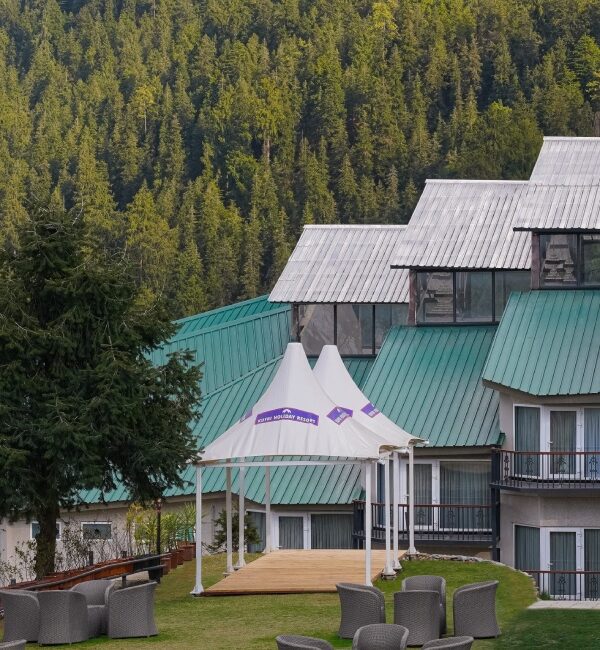
Kufri Heritage Resort and Spa is at 2,622 metres on the Kufri plateau, 13 km from Shimla and 360 km from Delhi on NH-5. It is the most accessible high-altitude resort in Himachal Pradesh’s most visited zone. Guests use it as the base for exploring Shimla, Chail, Fagu, Narkanda, and the wider Shimla belt while staying in 5-star resort comfort. Contact the resort team for availability, extended stay rates, and itinerary planning assistance for a Himachal circuit.
Frequently Asked Questions: Places to Visit in Himachal Pradesh
What is the most famous place in Himachal Pradesh?
Shimla is the most famous and most visited place in Himachal Pradesh, followed by Manali, Dharamshala, and Kufri. Shimla’s fame comes from its history as the former British summer capital of India, its colonial architecture, the UNESCO Heritage Kalka-Shimla Railway, and its accessibility from Delhi. Kufri, 13 km from Shimla at 2,622 metres, is increasingly prominent as the premier snow activity destination in the Shimla belt.
How many days are needed to cover Himachal Pradesh?
Himachal Pradesh cannot be fully covered in any practical trip , the state is large, mountainous, and road journeys are slow. A realistic approach: 5 to 7 days for the Shimla-Kufri-Narkanda belt. 7 to 10 days for a Shimla-Manali circuit. 10 to 14 days for a Shimla-Kinnaur-Spiti circuit. 7 days for Dharamshala and McLeod Ganj. Plan each zone as a separate trip rather than trying to cover all of Himachal in one journey , the road times between zones are long and rushing reduces the experience quality significantly.
Is Himachal Pradesh safe for solo female travellers?
Himachal Pradesh is generally considered safe for solo female travellers and ranks among the safer states in India for this category of visitor. Popular destinations (Shimla, Manali, Dharamshala-McLeod Ganj) have established tourist infrastructure, visible police presence, and international visitor communities. The usual precautions for solo travel apply: share itineraries, use established transport, avoid isolated routes after dark, and trust instinct. The Tibetan Buddhist character of McLeod Ganj and the relatively conservative Himachali culture in hill station towns creates an environment that many solo female travellers find more comfortable than more urban destinations.
Which is better for a first Himachal trip , Shimla or Manali?
Shimla is better for a first Himachal trip. It is closer to Delhi (345 km vs 570 km), more accessible year-round, has better road infrastructure, more diverse accommodation options, richer colonial heritage, and an easier introduction to Himalayan mountain life. Manali is higher, more remote, requires more travel time, and is better experienced as a second trip once you have the Shimla-Kufri experience as a reference point. The exception is if your specific goal is adventure sports (river rafting, skiing at Solang, Rohtang Pass motorcycle trip) , for those, Manali is the primary destination.
What is Himachal Pradesh famous for in terms of food?
Himachal Pradesh has a distinct mountain cuisine. Siddu (steamed wheat bread stuffed with poppy seeds or lentils, served with ghee and dal) is the most traditional Himachali staple. Trout fish from the mountain streams of Kullu is a regional delicacy. Aktori (buckwheat pancake), Chha Gosht (lamb in yogurt gravy), and Babru (black bean stuffed flatbread) are traditional dishes. In Shimla, the Himachali thali at local restaurants is the best way to try the regional cuisine authentically. The apple produce , fresh, dried, and in juice form , and local honey from the orchard areas are the best food souvenirs from the Shimla belt.
When is the Kullu Dussehra festival and is it worth visiting?
The Kullu Dussehra is held in the Dhalpur Maidan in Kullu town for 7 days beginning on Vijayadashami (the 10th day of Navratri, typically in October). It is one of the most spectacular regional festivals in North India , over 300 local deities from surrounding villages are brought in procession to Kullu to pay tribute to the principal deity Raghunath, with elaborate folk music, dance, and cultural performances. It draws domestic tourists but is not overwhelmingly crowded by the standards of national festivals. If your Himachal trip falls in October, combining the Kullu Dussehra (1 to 2 days) with a Shimla-Kufri leg makes for an excellent full-state circuit.
Make your stay part of the itinerary
Check current room availability directly before booking.