AT A GLANCE: SHIMLA IN AUGUST
| Daytime Temperature | 14-22°C |
| Night Temperature | 10-13°C |
| Season | Monsoon (tapering in late August) |
| Crowd Level | Low |
| Prices | Near-lowest of the year |
| Key Event | Independence Day – 15 August flag hoisting at The Ridge |
August is one of Shimla’s most underrated months. Tourists who arrived in June and July for peak summer have largely gone home, holiday crowds are thin, and the Himachal hills are draped in a shade of green so deep and saturated it looks almost unreal. Rain is still a genuine presence – especially in the first two weeks – but by the final stretch of August the showers grow lighter and the sky begins to offer tantalising glimpses of blue. Add a genuinely moving Independence Day celebration on 15 August at The Ridge, and you have a month that rewards travellers who are willing to pack a raincoat alongside their camera.
This guide covers everything you need to plan a Shimla visit in August 2026 – weather patterns, the Independence Day atmosphere, what to do on wet days and clear days, road safety, photography opportunities, and the budget advantage that few people talk about. Whether you are a solo backpacker watching every rupee or a family looking for cool air and hill-station charm without the summer stampede, August deserves serious consideration.
Shimla August Weather: What to Expect Week by Week
Understanding August in Shimla means understanding its two very different halves. The first fortnight – roughly 1 to 15 August – sits squarely in the peak monsoon window. Rainfall can be heavy and sustained, sometimes continuing for two or three days without a significant break. Temperatures are pleasantly cool during this period, rarely climbing above 22°C even at midday, and nights dip to around 10-11°C, making a light jacket essential after dark.
From around 16 August onwards, the monsoon begins its slow retreat. Rain becomes more intermittent rather than relentless. You might get a morning of drizzle followed by an afternoon of actual sunshine, or even a full clear day where the Himalayan ridgelines appear sharp and snow-capped peaks become visible on the northern horizon. These windows are not guaranteed, but they become progressively more frequent as the month closes out.
By the last week of August, experienced Himachal travellers will tell you there are flashes of what October feels like – crisp air, lower humidity, golden light in the late afternoon, and a countryside still lush from all the monsoon rain. This transition effect is one of August’s hidden gifts. You are catching the hills at their greenest while also getting the first hints of the clear, golden season that defines September and October in Shimla.
What this means practically is to pack in layers. A waterproof outer layer is non-negotiable for the first two weeks. Comfortable walking shoes with grip (the Mall Road and Jakhu hill paths can be slippery) matter more than fashion. And keep your schedule flexible – a plan built around outdoor sightseeing every single day will likely frustrate you, but a plan that mixes indoor cultural experiences, cosy cafe afternoons, and opportunistic outdoor excursions will feel just right.
Independence Day at The Ridge: A Shimla Highlight
If there is one reason to deliberately choose 15 August for a Shimla visit, it is the Independence Day ceremony at The Ridge. The Ridge is Shimla’s defining open space – a broad, flat promenade at 2,206 metres that sits at the heart of the colonial-era town, flanked by Christ Church to the east and commanding sweeping views across the valley. On Independence Day morning, the grounds fill with a ceremony that feels genuinely historic in its setting.
The flag hoisting draws government officials, school children in uniform, local families, and visitors alike. The ceremony typically begins in the morning hours and includes a formal parade, the national anthem, and cultural programmes that vary year to year but often feature folk dances from Himachal Pradesh’s many distinct regional traditions. The backdrop of the Himalayan ridgeline, often shrouded in wisps of monsoon mist, gives the whole occasion an atmosphere that flag-hoisting ceremonies in plains cities simply cannot replicate.
The colonial architecture around The Ridge – Christ Church with its stained glass windows, the neo-gothic Gaiety Theatre, the timber-and-plaster buildings of the old Mall – lends the Independence Day proceedings a layered significance. These are buildings built by the British to serve their summer capital, now stage to an annual celebration of self-governance. Walking The Mall on the evening of 15 August, when the town is decorated with tricolour flags and the air is cool with post-rain freshness, is a quietly memorable experience.
Practical note for 15 August: arrive at The Ridge at least 30-45 minutes before the ceremony begins to secure a good vantage point. Parking in central Shimla is restricted on national holidays – plan to use the ISBT parking areas at Tutikandi or Lakkar Bazaar and walk or take the lift up to The Mall. The ceremony area can get crowded, so keep children close and bring a small backpack rather than large luggage.
Ask the resort about your dates and room needs.
Check current room options and inclusions directly with the resort.
What to Do in Shimla in August
August rewards travellers who embrace the conditions rather than fight them. Here is a breakdown of activities that work well across the full range of August weather – wet days, misty days, and the clear windows that appear more frequently as the month progresses.
The Mall Road and Lakkar Bazaar: The classic Shimla stroll along The Mall from Scandal Point to Lakkar Bazaar is enjoyable even in light rain. The covered stretches, the wood-carving shops of Lakkar Bazaar, and the cafes tucked into the Victorian-era buildings make this a pleasant half-day regardless of weather. In August, without the summer tourist volume, you can actually browse at leisure rather than shuffle through crowds.
Jakhu Temple: The ancient Hanuman temple at the summit of Jakhu Hill (2,455 metres) is accessible by rope-way or by a roughly 2.5 km forest trail from The Mall. The trail through the rhododendron and oak forest is particularly beautiful in August – the trees are in full leaf and the forest floor is carpeted with ferns and moss. The resident rhesus monkeys are as bold as ever year-round, so keep food and glasses secured. The aerial ropeway is a good option if the trail is muddy after heavy rain.
Gaiety Theatre: This heritage theatre on The Mall dates to 1887 and stages Himachali and mainstream Hindi theatre productions. Check the Himachal Pradesh Tourism website for August 2026 listings. An evening show here is ideal for a rainy August evening and gives you access to one of Shimla’s finest colonial interiors.
Shimla State Museum: Opposite Chaura Maidan, the State Museum houses Himachali miniature paintings, bronzes, wood carvings, and colonial-era artefacts. It is an excellent wet-day option and rarely crowded in August. Allow two to three hours for a proper visit.
Waterfalls near Shimla: August is near-peak for seasonal waterfalls in the Shimla region. The Chadwick Falls inside the Shimla reserve forest are at their most dramatic during and just after monsoon rains. Johri waterfall off the Shimla-Kufri road is another worth visiting. Check road conditions before heading to either – forest paths can be slippery and occasionally closed after heavy rain.
Day Trip to Kufri: Kufri, 13 km from Shimla at 2,622 metres, is cooler and greener than Shimla proper in August. The high meadows around Mahasu Peak are blanketed in wildflowers and the views, when mist clears, extend across deep valley folds. Horse riding and the Kufri Fun World amusement park operate through monsoon season. If you are staying at Kufri Heritage Resort, these experiences are essentially on your doorstep.
Photography in August: Green Season Magic
For photographers – or anyone who simply loves beautiful landscape images – August in Shimla is exceptional. The monsoon pushes the landscape to its chromatic peak. Valley forests turn a green so vivid it almost pulses. Terraced fields on the lower hillsides are planted and growing. Cloud shadows race across ridge after ridge. And when a break appears in the weather, the light that follows has a particular quality – soft, golden, filtered through residual haze – that is unlike any other month.
Mist rolling over the Shimla valleys in early morning is one of the signature images of the green season. From The Ridge or the upper paths around Jakhu, you can watch cloud systems fill the valleys below like a slow tide while the ridgelines above you stay clear. This happens most reliably in the early morning – another argument for getting up before sunrise if the weather looks promising the evening before.
Waterfalls are at or near peak flow in August. Any stream crossing you made in May looking dry and rocky will now be roaring white. The Chadwick Falls in particular photograph dramatically in August when the full flow is active. Seasonal waterfalls that do not appear on any map will surprise you on road bends and forest walks.
A practical photography tip for monsoon Shimla: keep your camera dry with a rain sleeve or a simple plastic bag with a hole cut for the lens. The light can change from flat grey to beautiful within minutes, so keep your camera accessible rather than packed away. Wide lenses suit the valley vistas; a medium telephoto is useful for the mist and ridge-layer compositions that August provides so generously.
Stay at Kufri Heritage Resort and Spa
5-star luxury at 2,622 metres – 13 km from Shimla. Spa, restaurant, mountain views and bonfire evenings.
Check Latest Price NowThe Budget Advantage: Why August is Shimla’s Best Value Month
Along with July, August consistently offers the lowest hotel and guesthouse rates in Shimla across the year. The peak summer crowds of May and June have departed, the festive autumn surge of October-November has not yet arrived, and operators price accordingly. You will find properties offering rates that are 30-50 percent lower than their peak-season equivalents – sometimes more.
Beyond accommodation, the low-crowd conditions translate into real practical benefits. Tables at good restaurants do not need advance booking. Auto-rickshaws and taxis are easier to flag down and negotiate with. Popular viewpoints like The Ridge and Jakhu summit are peaceful rather than packed. Even the Toy Train – the narrow-gauge Kalka-Shimla Railway, a UNESCO World Heritage route – has seats available at short notice in August, whereas peak-season booking is advisable weeks in advance.
For families travelling with school-age children, August 2026 does present one consideration: the school term will have restarted in most states by mid-August, which limits the ability to pull children from school for a mid-month trip. However, Independence Day on 15 August falls mid-week in 2026 and creates a potential long-weekend window depending on the calendar configuration. Travellers without school-age children, couples, retirees, and remote-working professionals will find August the most cost-effective and uncrowded way to experience Shimla.
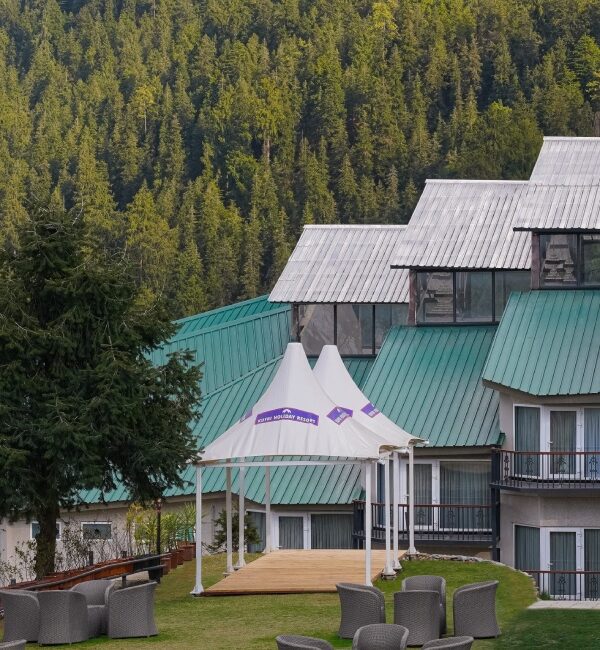
Kufri Heritage Resort and Spa, 13 km from Shimla at 2,622 metres, offers August rates that reflect the off-peak season – on request to understand current availability and packages. The resort’s elevation means temperatures are noticeably cooler than central Shimla, which makes the spa facilities and bonfire evenings particularly appealing when August evenings turn crisp.
Late August: The Transition Begins
One of the most interesting things about late August in Shimla is the sense of seasonal transition that begins to establish itself. From roughly 20 August onwards – though this varies year to year – the monsoon visibly starts to loosen its grip. Rainfall becomes more episodic. Afternoons see longer spells of sunshine. The humidity that characterises peak monsoon weeks drops perceptibly, and the air takes on a slightly crisper quality that feels more autumn than summer.
This is when Shimla starts to look like both its monsoon self and its October self simultaneously. The landscape is still deeply green – all that July and August rain has saturated the hillsides – but the light is already shifting toward the golden, lower-angle quality that makes September and October so photogenic. On a clear late-August evening from Jakhu summit or The Ridge, you may catch a distant view of the Dhauladhar or Pir Panjal ranges that would not have been possible through the July murk.
If your travel dates are flexible and you are choosing between late August and early September, this transitional period actually offers a compelling case for late August – you still get the green-season landscape at its peak, the waterfalls are still roaring, and the prices are still at their August low, while the weather is increasingly cooperative. It is a combination that the more popular October window cannot match for value, even if it cannot yet guarantee the sustained blue skies of autumn.
Plan Your Shimla and Kufri Trip
Kufri Heritage Resort and Spa – the ideal base for all Shimla-area sightseeing and Kufri activities.
Call for Best PriceFrequently Asked Questions: Shimla in August 2026
Is Independence Day special to experience in Shimla?
Yes – the flag hoisting ceremony at The Ridge on 15 August is one of the more atmospheric Independence Day observances in any Indian hill station. The colonial-era setting, the cultural programmes, the tricolour decorations against a backdrop of monsoon mist and Himalayan ridgelines, and the relatively modest crowd size compared to plains cities all combine to make it a genuinely memorable occasion. Arrive early to secure a good spot on the open grounds of The Ridge.
Is road travel to and within Shimla safe in August?
The Shimla region does experience landslides and road blockages during heavy monsoon rainfall, particularly on the older hill roads and on routes toward Kinnaur and Spiti. The main Kalka-Shimla National Highway (NH-5) is generally well-maintained but can see temporary delays after very heavy rainfall. Check the Himachal Pradesh Road Transport Corporation (HRTC) advisories and local news before and during your trip, avoid night driving in the hills, and keep your schedule flexible enough to accommodate a half-day delay if a road needs to be cleared.
Is August or September better for a Shimla trip?
It depends on your priorities. September offers more reliable sunshine, lower humidity, and cleaner mountain views – it is a more straightforwardly comfortable month. August offers deeper green landscapes, more dramatic waterfalls, lower prices, and – if you time it right – the Independence Day experience. Late August (20-31) is increasingly a strong compromise, giving you much of September’s improving weather while retaining August’s landscape colour and value pricing.
Are tourist activities and attractions open in August?
Yes – all of Shimla’s main attractions remain open in August. The Mall, Jakhu Temple, State Museum, Gaiety Theatre, and Kufri Fun World all operate through the monsoon season. The Jakhu ropeway and the Kalka-Shimla Toy Train continue running. Some high-altitude trekking routes above 3,000 metres may be temporarily closed after heavy rainfall, but the town’s main sightseeing options are fully accessible. It is always worth a quick check on the specific day if weather has been severe the night before.
What are the best days to visit Shimla in August 2026?
The last ten days of August – roughly 22 to 31 – offer the best statistical chance of favourable weather while still giving you the green-season landscape. Within the full month, Independence Day weekend around 15 August is worth targeting specifically for the atmosphere and cultural events at The Ridge. The first two weeks carry the highest rainfall probability and are best suited to travellers who are flexible and genuinely comfortable with monsoon conditions, or who specifically want to photograph the mist-and-waterfall landscape at its most dramatic.
Ready to experience Kufri?
Talk to the resort directly to check current availability for your dates.