AT A GLANCE: SHIMLA IN OCTOBER 2026

Daytime Temperature8°C to 18°C
Night Temperature3°C to 8°C
Sky ClarityExcellent - 80 to 90% clear days (best of year)
Crowd LevelLow to Moderate
Hotel Prices20-30% below peak season rates
Key EventsDussehra celebrations | Apple harvest season

Most travellers overlook October when planning a Shimla trip. They chase the monsoon greens of July or the snowfall magic of January, and in doing so, they miss what many experienced Himalayan travellers quietly consider the finest month of the entire year. October in Shimla is a month of extraordinary clarity - a window between the wet season and the cold winter when the skies scrub themselves clean, the mountains reveal themselves in full detail, and the hill station breathes a long, unhurried sigh of relief.

This guide covers everything you need to know about visiting Shimla in October 2026: the weather day by day, the Dussehra festival, the apple harvest villages around Kufri, the trekking conditions, and why this underrated month might just deliver the most rewarding Himachal Pradesh holiday you have ever taken.

October Weather in Shimla: Crystal Clear and Perfectly Cool

The monsoon over Shimla typically retreats by late September, and October steps in as the great reward for everyone who waited. Daytime temperatures settle between 8°C and 18°C - warm enough for comfortable outdoor activity in light layers, yet cool enough to make every uphill walk a pleasure rather than a sweat. Evenings drop to 3°C to 8°C, and that nip in the air is part of the charm. A bonfire at your resort suddenly becomes not just an amenity but a genuine necessity.

The defining feature of October weather in Shimla, though, is the sky. With monsoon moisture now largely gone, visibility reaches its annual peak. On a clear October morning - and the vast majority of October mornings are clear - you can see Himalayan peaks that remain hidden beneath cloud cover for most of the year. The Chail range, the ridges above Narkanda, and on exceptionally transparent days, distant snowcapped summits appear so sharp they look almost unreal. Weather data consistently shows 80 to 90 percent of October days in Shimla are clear or mostly clear, making this statistically the most reliable month for mountain views anywhere in the western Himalayas.

Rainfall in October is minimal. An occasional brief shower is possible in the first week as the monsoon finishes its exit, but by mid-October, dry sunny days are essentially guaranteed. The ground on walking trails has dried out fully. The roads around Shimla and up to Kufri are in excellent condition after repair work done post-monsoon. Everything about the practical logistics of travel in October is easier and more predictable than any summer month.

For families travelling with young children or elderly guests, October's temperatures hit a particularly comfortable middle ground. It is never hot enough to cause fatigue, never so cold as to require extreme winter gear. A good fleece or light down jacket handles the evenings comfortably, and daytime walks are conducted in a single warm layer.

Dussehra in Shimla: The Festival That Fills October with Colour

October 2026 brings Dussehra, one of India's most celebrated festivals, and Shimla observes it with genuine enthusiasm. Dussehra marks the victory of good over evil - the defeat of the demon king Ravana by Lord Ram - and the festivities in and around Shimla combine religious ceremony, cultural performance, and community celebration in a way that is deeply engaging for visitors from any background.

The main event is the burning of Ravana effigies, which takes place at large open grounds in Shimla town. The effigies can stand many metres tall, packed with firecrackers, and the culminating moment when they are set alight draws thousands of spectators. The air fills with smoke and sound, children sit on shoulders to see above the crowds, and the energy is electric in a way that is difficult to describe but impossible to forget.

In the days leading up to Dussehra, Shimla's Mall Road and surrounding areas take on a festive atmosphere. Temporary stalls sell sweets, toys, and seasonal produce. Local theatre and Ram Lila performances - dramatic re-enactments of episodes from the Ramayana - play out across the town in the evenings. For travellers who appreciate cultural immersion rather than purely scenic tourism, timing a Shimla trip around Dussehra adds a dimension to the visit that no amount of sightseeing alone can replicate.

Nearby villages around Kufri also observe Dussehra with local traditions that feel more intimate and less crowded than the main town events. If you are staying at a resort in Kufri, asking your hosts about nearby village celebrations is well worth it. These smaller observances often retain customs and musical traditions that have been partly commercialised in larger urban celebrations.

Apple Harvest Season: Kufri and the Orchard Villages

One of October's most distinctive and least-publicised attractions around Shimla is the apple harvest. Himachal Pradesh produces roughly half of India's total apple crop, and the orchards around Kufri, Fagu, Narkanda, and the villages between Shimla and Rampur are at their most spectacular in September and October. By the time October arrives, harvest is at its peak or just completing, and the orchards hang heavy with fruit.

Driving or walking through the Kufri area in October, you pass apple-laden trees on both sides of the road, their branches arching under the weight. The apples range in variety from the familiar Royal Delicious to local Himachali types with names most visitors have never heard. Roadside stalls sell fresh apples, apple juice pressed on the spot, and bottles of local apple cider. The produce is genuinely extraordinary - grown at altitude in cool, clear air, these apples have a density of flavour that supermarket varieties rarely match.

Some orchards in the Kufri vicinity welcome visitors to walk among the trees during harvest. This is not a formal tourist attraction with ticket booths and guided tours - it is simply a rural community at work, and the welcome extended to curious visitors reflects the genuine warmth of Himachali hospitality. Children visiting with parents find the experience of picking an apple directly from a branch, still cool from the mountain air, genuinely memorable in a way that no resort amenity can quite replicate.

The villages around Kufri in October also carry the visual richness of the season. Marigold flowers - grown for the festival season - burst from window boxes and courtyard pots. The rhododendron forest has shifted to autumn tones. The contrast between the red-orange of apple orchards, the gold of turning leaves, and the deep blue of the October sky makes this landscape one of the most photogenic in all of northern India during this window.

Trekking Around Shimla in October: The Best Month on the Trails

For trekking enthusiasts, October is simply the finest month to be in the Shimla region. The three factors that make trekking exceptional - dry trails, comfortable temperatures, and clear views - all align in October in a way that no other season can match. Monsoon trails that were muddy and slippery through July and August have had weeks to dry out. The cool temperatures mean you can push hard without overheating. And the visibility on ridgeline trails offers mountain panoramas that summer haze and monsoon cloud completely obscure.

The trail from Kufri up to Chail via the Shali Tibba ridge is particularly rewarding in October. On a clear morning - again, the majority of October mornings qualify - the views from Shali Tibba extend across multiple ranges, with the snow-dusted higher Himalayas visible on the northern horizon. This trek is achievable by reasonably fit adults in a full day, with the October conditions making the effort substantially less demanding than the same walk in June.

The Kufri-Fagu loop is another excellent October option, passing through apple orchard country and forest trails that are particularly atmospheric with autumn colour. Shorter walks around the Kufri meadows offer excellent photography opportunities and are accessible to guests of all fitness levels. Jakhu Hill above Shimla - famous for its Hanuman temple and resident rhesus monkeys - is best visited in October when the morning light is golden and the views from the summit extend far further than in any summer month.

Guides for longer treks in the Shimla region are available through local operators, and October conditions make multi-day options like the Jalori Pass trek very attractive for those with more time. The high-altitude passes are still open in early and mid-October before pre-winter snow closes some routes, making this a narrow but excellent window for serious Himalayan trekking at accessible altitudes.

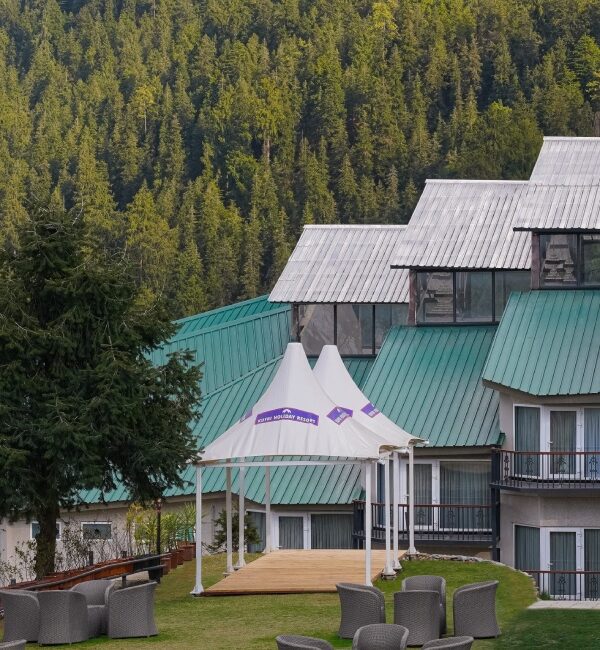
Stay at Kufri Heritage Resort and Spa

5-star luxury at 2,622 metres - 13 km from Shimla. Spa, restaurant, mountain views and bonfire evenings.

Check Latest Price Now

Photography in October: Why Shimla's Best Light Happens Now

Among landscape and travel photographers, October in the western Himalayas is an open secret. The combination of post-monsoon clarity, low-angle autumn light, and rich seasonal colour creates conditions that professionals plan entire trips around. For amateur photographers with a good smartphone or a modest camera, October in Shimla will produce images that look almost too good to be from a casual holiday.

The quality of October light around Shimla is directly tied to the atmosphere's clarity after the monsoon. Without monsoon moisture and summer haze degrading visibility, distant mountains appear with a sharpness that gives photographs genuine depth. The golden hour before sunset turns the pine-covered ridges around Kufri into layers of warm amber and shadow. Sunrise from an elevated vantage point - the meadow at Kufri, for example, or any open ridge - reveals the Himalayan panorama in soft pink light against a sky that shifts from deep indigo to brilliant blue within minutes.

October's autumn colour adds a compositional element that is simply not present in other months. The chestnut and oak trees that grow alongside the deodars around Shimla turn yellow and orange in October, adding warm tones to a landscape that is predominantly evergreen. Apple orchards in full harvest colour, festival decorations for Dussehra, and the vivid marigolds of the season give photographers abundant foreground interest to complement the mountain backdrops.

For night photography, October also performs well. The cold, dry air produces exceptional star visibility, and the resort areas above Shimla - particularly at Kufri's altitude of 2,622 metres - sit above the worst of the valley light pollution. A night sky in October from Kufri Heritage Resort offers the kind of Milky Way visibility that most city-dwelling visitors have genuinely never experienced.

Why October is Shimla's Most Underrated Month - and How to Make the Most of It

The case for October keeps stacking up: the best weather, the clearest skies, the most comfortable trekking conditions, the Dussehra festival, the apple harvest, and peak photography light. Yet October consistently sees lower visitor numbers and lower hotel prices than the summer peak months of May and June or the December-January snow season. This paradox - the best weather at the lowest prices - is what makes October such an obvious choice once you know about it.

Crowds on the Mall Road in Shimla in October are manageable in a way they simply are not in peak summer. The famous toy train from Kalka to Shimla has seats available with reasonable advance notice, whereas summer months see it booked weeks out. Restaurants have tables. Viewpoints are not fighting crowds for the best spot. The overall experience of being in Shimla in October has a quality of ease and spaciousness that the hill station's peak-season reputation does not always allow.

Hotel rates in October typically run 20 to 30 percent below June prices for equivalent properties, and the value extends beyond room rates. Many resorts offer October packages that include meals, activities, or spa treatments at rates that represent genuine value relative to what the same package costs in summer. At Kufri Heritage Resort and Spa, the outdoor pool remains open through October - an extraordinary experience when daytime temperatures are comfortable and the views from the pool stretch across the valley to distant peaks. This combination of open-air swimming with Himalayan panoramas at altitude is available for a limited window, and October is the last month to enjoy it before the season closes.

The ideal time within October for a Shimla visit is the second and third week, after any lingering early-month uncertainty from the monsoon's tail end and before the last week when temperatures begin dropping more sharply toward November levels. Arriving around the 8th to 20th of October captures the Dussehra festival window in most years (the exact date varies with the Hindu lunar calendar), the peak apple harvest, and the most settled weather of the month. A stay of four to five nights gives enough time to explore Shimla town, experience Kufri and the surrounding villages, complete at least one full-day trek, and absorb the particular atmosphere of October in the mountains without rushing.

Plan Your Shimla and Kufri Trip

Kufri Heritage Resort and Spa - the ideal base for all Shimla-area sightseeing and Kufri activities.

Call for Best Price

Frequently Asked Questions: Shimla in October 2026

Q: Does it snow in Shimla in October?
Snow in Shimla town itself is very unlikely in October. Shimla sits at around 2,200 metres and typically does not see snowfall until late November or December at the earliest. Higher elevations above 3,500 metres may receive early-season snow in late October, but this does not affect Shimla or Kufri. What October does offer is the sight of permanently snowcapped peaks on the northern horizon, which are actually more visible in October than in any other month due to the exceptional atmospheric clarity after the monsoon.

Q: Is October a good month to visit Shimla?
October is arguably the best month to visit Shimla, though it remains underappreciated by many travellers. The weather is pleasantly cool with daytime temperatures between 8°C and 18°C, skies are clearer than any other month of the year, rainfall is minimal, and hotel prices run 20 to 30 percent below the summer peak. Add the Dussehra festival and the apple harvest season in villages around Kufri, and October delivers an experience that is richer in many ways than the more popular summer months.

Q: Can I visit apple orchards near Shimla in October?
Yes - October is actually the ideal time to experience apple orchards around Kufri, Fagu, and other villages in the Shimla region. The harvest is at or near its peak, and apple-laden trees line the roads through the orchard country. Roadside stalls sell fresh apples and apple juice pressed on the spot, and some orchards welcome visitors to walk among the trees. The Kufri area in particular is surrounded by orchard villages that are easy to reach on a half-day excursion from a Kufri resort base.

Q: What is the best week to visit Shimla in October 2026?
The second and third weeks of October - roughly the 8th to the 20th - offer the most reliable combination of settled weather, festival atmosphere, and comfortable temperatures. This window typically coincides with Dussehra celebrations and the peak of the apple harvest season. The first week of October can occasionally still carry traces of late monsoon weather, while the final week of October sees temperatures beginning to drop noticeably toward November levels. Mid-October gives you the best of the month.

Q: Is the pool open at Kufri Heritage Resort in October?
Yes - the outdoor pool at Kufri Heritage Resort and Spa remains open through October, making it one of the unique experiences of a stay at the resort during this month. Swimming at 2,622 metres with Himalayan valley views on a clear October afternoon is a genuinely memorable experience, and October is the last month before the season closes. Call or check the resort website for the latest information on pool timings and availability during your specific travel dates, as conditions can vary depending on early cold spells.