AT A GLANCE: SHIMLA IN JULY
| Temperature (Day) | 14-22 degrees C |
| Temperature (Night) | 10-14 degrees C |
| Season | Peak monsoon |
| Rainfall | Heavy – 400 to 600 mm monthly |
| Road Conditions | NH-5 generally safe – check HP traffic alerts |
| Crowds and Prices | Low crowds – lowest prices of the year |
July is the month that divides opinion on Shimla travel. The summer crowds have gone, the roads are quieter, and the entire hillside turns a shade of green so vivid it looks unreal. But the rain arrives in earnest – not the occasional shower of June, but persistent, heavy, hill-soaking monsoon rain that can last for hours and blanket the valleys in low cloud and mist. If you have come to Shimla expecting clear blue skies and easy sightseeing from sunrise to sunset, July will surprise you. If you have come looking for dramatic landscapes, thundering waterfalls, romantic misty mornings, and a resort to yourself, July will deliver exactly that.
This guide covers everything you need to know about Shimla in July 2026 – the weather to expect, safety on the roads, what to do when rain keeps you indoors, and the unique experiences that only this season offers. Whether you are planning a honeymoon escape or a quiet family retreat, read on before you book.
Shimla Weather in July: What the Monsoon Actually Feels Like
The southwest monsoon typically reaches Shimla in late June and is in full force throughout July. Daytime temperatures sit comfortably between 14 and 22 degrees Celsius – cool enough for light layers, never oppressive. Nights drop to 10-14 degrees, and on particularly overcast evenings you will want a proper fleece or a warm jacket. Compare this to Delhi in July at 38-40 degrees and it becomes obvious why Shimla remains appealing even during monsoon season.
What makes July distinctive is not the cold but the moisture. Rainfall averages 400 to 600 mm across the month – one of the highest figures in the Himalayan foothills. Rain tends to fall in extended spells rather than short bursts. A typical July day in Shimla might offer a dry morning window between 6 am and 10 am, followed by cloud build-up, then steady rain through the afternoon and evening. Some days are grey from start to finish. Some mornings are so clear you can see the snow-capped ridgelines far to the north before the mist rolls in by 9 am.
The landscape responds dramatically. Every slope is saturated green. Waterfalls appear on hillsides that are completely dry in winter. The forests around Kufri and Fagu smell of pine resin and wet earth. Low cloud wraps the ridgelines and hangs in the valleys between the hills. From a resort at elevation, you may find yourself literally inside a cloud – the kind of soft, drifting white that makes the world feel very small and very quiet.
Packing for Shimla in July means waterproof layers above everything else. A good rain jacket, waterproof shoes or boots, and an umbrella are non-negotiable. Quick-dry fabrics are more practical than cotton. A small daypack with a rain cover will protect your camera and phone during outdoor excursions.
Is Shimla Safe in July? Roads, Landslides, and What to Watch
Safety is the first question most travellers ask about Shimla in July, and the honest answer is: yes, Shimla is generally safe in July, provided you take sensible precautions and stay informed.
National Highway 5 (NH-5), the main road connecting Shimla to Chandigarh and Delhi, is a well-maintained route and remains open and navigable throughout most of July. The highway authority carries out regular maintenance, and the road is wide enough with proper drainage at most sections to handle heavy rainfall. Driving on NH-5 in July is not the same as driving on a remote mountain track – it is a busy, functioning highway used by trucks, buses, and tourist vehicles every single day of the monsoon season.
That said, the broader Himachal Pradesh hill road network is a different matter. Smaller roads to villages, minor forest roads, and routes above 2,500 metres can be affected by landslips, blocked by fallen debris, or washed out temporarily during particularly heavy spells. The Himachal Pradesh Public Works Department and the HP Traffic Police update road conditions in real time. Before any day trip or arrival by road in July, check the official HP traffic alerts online or call your resort for a local condition update.
A few practical safety rules for July travel in Shimla:
- Avoid driving at night during heavy rain – headlights and wet roads are a poor combination in the hills.
- If water is running across a road, do not attempt to cross it on foot. The depth and current are deceptive.
- Stay away from stream banks and drainage gullies during or immediately after heavy rainfall – water levels can surge very quickly.
- Do not stand under steep, loose hillsides during rain. Debris falls with no warning.
- Keep your resort or host informed of your plans so that someone knows your route and expected return time.
With those precautions in place, thousands of visitors travel to and around Shimla in July without incident every single year. The risks are real but manageable with common sense.
Skip the OTAs. Book direct with the resort.
Best rate guaranteed. Complimentary breakfast for direct bookings.
Chadwick Falls in July: Peak Flow and Maximum Drama
If you visit Shimla in July for one reason above all others, make it Chadwick Falls. Located approximately 7 km from the Shimla town centre in the Glen Forest area, Chadwick Falls drops around 67 metres through dense forest – and in July, it is at its absolute best.
For most of the year, Chadwick Falls is a modest, pleasant waterfall. In July, it becomes something else entirely. The weeks of accumulated monsoon rain push enormous volumes of water over the lip of the falls, creating a roar you can hear from well back on the approach path. The spray creates a permanent fine mist around the base, and the surrounding forest – already deeply green from the rains – frames the white torrent in a way that no camera sensor can fully capture. This is the waterfall that appears on Shimla postcards, and July is when it earns that status.
Getting there involves a walk down a forested path. The path itself can be muddy and slippery in monsoon conditions – good footwear with grip is essential. Start early in the morning when the rain is likely to hold off and the light is clean and soft. The Himachal Pradesh Forest Department manages the area and may have entry and timing restrictions; confirm these locally before you go.
Other waterfalls become active across the Shimla hills in July. The hillsides on the drive between Shimla and Kufri frequently show temporary cascades running off the ridges above the road – appearing for a few days after sustained rain and then drying out. These seasonal falls are often the most photogenic precisely because they are unexpected.
What to Do in Shimla and Kufri in July
Planning activities in July requires flexibility. The approach that works best is to keep mornings free for outdoor activity and afternoons available for indoor time. Here is a practical breakdown of what works in the monsoon season.
Morning walks and valley viewpoints. The period between 6 am and 10 am is reliably drier on many July mornings. Use this window for walking. The Ridge and Mall Road in Shimla are beautiful at this hour – cool air, light mist, very few people. Jakhu Hill, home to the famous Hanuman Temple, offers views over the town and surrounding ridges that are genuinely spectacular when clouds are moving through the valley below you. The 2 km walk up Jakhu is manageable even in light rain if you have a jacket and an umbrella.
Himalayan Nature Park, Kufri. Set across 90 hectares of mixed forest at around 2,600 metres, the Himalayan Nature Park is home to snow leopards, Himalayan bears, musk deer, and hundreds of bird species. The park is open through monsoon season and the dense, wet forest atmosphere of July makes it feel genuinely wild. Covered sections of the path offer some shelter from rain. Morning visits when mist fills the tree line make for extraordinary photographs.
Kufri Fun World. The amusement park and activity centre at Kufri is a reliable option on a rainy afternoon, particularly for families. Go-karts, a giant wheel, and other rides operate through the monsoon period. Check current operating hours before visiting as these can vary by season.
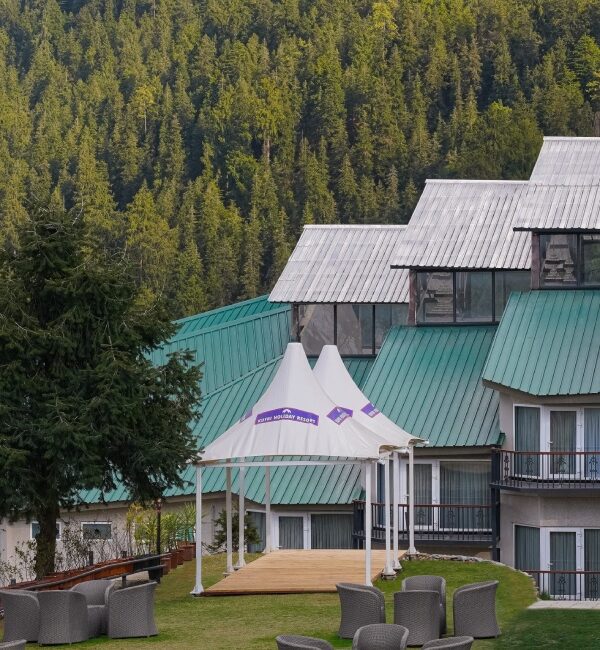
Resort and spa time. In July, the resort becomes the destination. A 5-star property with a spa, restaurant, and outdoor bonfire area is genuinely where you want to be when rain keeps you indoors. Spa treatments, long lunches with mountain views from the window, reading by a fire, and board games in the evening are not compromise options in July – they are the core of the experience. Many guests who visit Shimla and Kufri in monsoon season report that the unhurried resort time is what they remember most fondly.
Indira Gandhi Medical College Natural History Museum. If you are in Shimla town on a rainy afternoon, the museum near the old civil hospital has an interesting natural history and Himalayan ecology collection. It is a genuinely educational stop and entirely weather-proof.
Shopping on the Mall. The covered arcades and indoor shops along Mall Road in Shimla sell Himachali shawls, local honey, Kullu caps, and handcrafted woodwork. July is a good month to shop – fewer tourists means better attention from shopkeepers and no queues.
Stay at Kufri Heritage Resort and Spa
5-star luxury at 2,622 metres – 13 km from Shimla. Spa, restaurant, mountain views and bonfire evenings.
Check Latest Price NowMonsoon Photography in Shimla: Tips for the Season
July offers photographic conditions you simply cannot find in any other month around Shimla. The challenge is learning to work with the light, the moisture, and the unpredictable weather rather than against it.
Embrace the mist. The instinct when mist rolls into the valley is to put the camera away and wait for it to clear. Resist that instinct. Mist creates layering in landscape photographs – ridgelines and treetops appearing through successive bands of cloud at different distances, giving images genuine depth and mood. A Shimla valley shot in July looks nothing like a Shimla valley shot in April. It looks more atmospheric, more mysterious, and for many photographers more interesting.
Shoot waterfalls on a cloudy background. Direct sunlight on a waterfall creates harsh highlights and blown-out whites. Overcast July light is actually ideal for waterfalls – the soft, diffuse illumination reveals texture in the water and keeps contrast manageable. Chadwick Falls and the roadside cascades between Shimla and Kufri photograph best on grey mornings, not bright ones.
Use a polarising filter. A circular polariser cuts through the glare on wet leaves and rocks, saturating the greens and reducing reflection on surfaces soaked by rain. July green landscapes around Kufri and the Himalayan Nature Park are the single best use case for this filter in the entire year at this location.
Protect your gear. Moisture is the enemy of camera electronics. A rain sleeve or waterproof bag for your camera is essential. Silica gel packets inside your camera bag at night absorb moisture and protect lenses from condensation. If your lens fogs up moving between a warm interior and cold outdoor air, let it acclimatise gradually before shooting rather than wiping the element directly.
Golden hour after rain. On the rare July evening when clouds break and the sun drops toward the western ridges, the light is extraordinary. The washed air is completely clear of haze, and the wet hillsides reflect golden light with unusual intensity. Keep your camera accessible in the late afternoon – when the rain stops and the cloud shifts, you may have 20 minutes of the best light of your entire trip.
Why Some Travellers Love Shimla in July
It would be easy to write July off as Shimla’s difficult month – the one to avoid. But a growing number of travellers actively seek it out, and for reasons that are entirely coherent once you understand what the season offers.
The green is extraordinary. Shimla in April and May is lovely, but the hillsides in those months are a patchwork of bare oak and deodar with dry grass underneath. By mid-July, every surface is saturated green. Ferns cover the forest floor. Moss covers the walls. The meadows above Kufri are lush and full of wildflowers. The visual effect is so different from Shimla in other seasons that it barely looks like the same place.
Prices are the lowest of the year. July is the off-peak month for Shimla. Hotels and resorts reduce their rates significantly compared to the May-June peak season. A 5-star property in Kufri in July typically costs a fraction of what the same room costs during the apple blossom season or the summer holiday period. For travellers who care more about quality of experience than calendar convenience, this is a compelling reason to visit.
No crowds at all. Mall Road without crowds. Jakhu Temple without queues. Chadwick Falls with the path to yourself. Kufri viewpoints with no other tourists in the frame. July Shimla is the version of the place that residents know and love – unhurried, quiet, and entirely lacking the frantic energy of peak summer.
Romantic atmosphere. The combination of mist, cool air, lush green hillsides, and cosy resort evenings makes July an unexpectedly strong choice for couples. Honeymoon travellers and anniversary pairs who want genuine atmosphere rather than sunshine-and-sightseeing often find July more memorable than any other month. A misty morning walk, a waterfall in full flood, a spa afternoon, and a bonfire dinner – this is not a compromise itinerary, it is a considered one.
Plan Your Shimla and Kufri Trip
Kufri Heritage Resort and Spa – the ideal base for all Shimla-area sightseeing and Kufri activities.
Call for Best PriceFrequently Asked Questions: Shimla in July 2026
Is Shimla safe to visit in July?
Yes, Shimla is generally safe to visit in July. The town itself and the main NH-5 highway remain accessible throughout the monsoon season. The key precaution is to check HP traffic alerts before any road journey and to avoid hiking near swollen streams or steep unstable slopes during or just after heavy rain. Thousands of visitors travel to Shimla every July without incident by following basic common sense.
Are road closures common on the way to Shimla in July?
Full closures on NH-5 between Chandigarh and Shimla are not common, though brief delays from debris clearance can occur after particularly heavy overnight rain. Smaller roads in the district – especially minor forest tracks and routes to higher villages – are more vulnerable to landslips. Always check the Himachal Pradesh PWD or HP Traffic Police updates on the morning of your travel day, and allow extra time for your journey.
What is there to do in Shimla when it is raining in July?
Quite a lot. Indoor options include spa treatments at your resort, shopping along Shimla’s Mall Road and covered arcades, visiting the natural history museum, and exploring Shimla’s heritage architecture under an umbrella along the pedestrian ridge. The Himalayan Nature Park at Kufri is enjoyable even in light rain. For families, Kufri Fun World has covered and outdoor rides. When confined to the resort, long meals, board games, and bonfire evenings in a covered outdoor space are genuine pleasures rather than consolation prizes.
Is Shimla worth visiting in July or should I wait for a drier month?
It depends entirely on what you want from the trip. If you want clear skies, long outdoor days, and easy sightseeing in every direction, wait for October or November. If you want extraordinary green landscapes, dramatic waterfalls, very low prices, no crowds, and a genuinely romantic misty atmosphere with comfortable cool temperatures, July is worth visiting. Many seasoned Shimla travellers consider the monsoon season among their best visits precisely because the experience is so different from the tourist-season version of the destination.
Where exactly are the waterfalls near Shimla and how do I reach Chadwick Falls?
Chadwick Falls is the most accessible and dramatic waterfall near Shimla, located approximately 7 km from the town centre in the Glen Forest area. It is reachable by car or taxi to the trailhead, followed by a forest walk of around 1.5 km to the viewpoint. The path can be slippery in July so wear proper grip footwear. Smaller seasonal waterfalls appear throughout the hills between Shimla and Kufri along the main road during July – these are visible from the road and require no hiking. The Kufri area itself has several forest streams that swell dramatically in monsoon season and are best seen on a guided nature walk from a local resort.
Ready to experience Kufri Heritage?
Talk to the resort directly. Real rates, an answer within the hour, no booking fees.