AT A GLANCE: HIMALAYAN NATURE PARK KUFRI
| Official Name | Himalayan Nature Park (Kufri Zoo) |
| Location | Kufri, 1 km from Kufri market |
| Timings | 9:00 AM to 5:00 PM | Closed Mondays |
| Entry Fee | Approx Rs 150 adults, Rs 80 children |
| Area | 90-hectare wildlife sanctuary |
| Key Animals | Snow leopard, Himalayan black bear, monal pheasant, barking deer, serow |
If you are heading to Kufri and want to see Himalayan wildlife in something close to its natural setting, the Himalayan Nature Park should be at the top of your list. Often called Kufri Zoo by visitors, this is far more than a row of cages. Spread across roughly 90 hectares of dense deodar forest, it is a true wildlife sanctuary that houses animals and birds native to the Western Himalayas in spacious, forested enclosures that mimic their natural habitat.
This guide covers everything a first-time visitor needs to know in 2026: the entry fee, timings, the animals you can realistically expect to spot, the best time of day for wildlife sightings, photography tips, how long to plan for, and exactly how to reach it from Kufri Heritage Resort and Spa. Whether you are travelling with children, are a keen birdwatcher, or simply want a peaceful forest walk at altitude, the Himalayan Nature Park delivers a memorable few hours.
What Is the Himalayan Nature Park?
The Himalayan Nature Park is a 90-hectare wildlife reserve located at Kufri, about 16 km from Shimla and just 1 km from the main Kufri market. Established to conserve the flora and fauna of the Western Himalayas, it is not a conventional concrete-and-iron zoo. Instead, the animals live within large, fenced sections of genuine deodar and oak forest at an altitude of more than 2,500 metres. The cool mountain climate and the natural terrain mean the species you see here are living in conditions very close to their wild homes.
The park doubles as a conservation and breeding centre for several threatened Himalayan species. As you walk the marked trails, you pass through tall conifer woodland, past observation platforms, and along quiet stretches where the only sounds are birdsong and the wind through the trees. For many visitors, the forest walk itself is as rewarding as the wildlife. It is a welcome contrast to the busier, more commercial parts of Kufri, and it suits families, nature lovers, and photographers equally well.
Because it sits within a living forest, the park also shelters wild birds and free-roaming species beyond the managed enclosures. Keep your eyes and ears open throughout the circuit, not just at the viewing points.
Related Reading
Key Animals to See at the Himalayan Nature Park
The big draw is the chance to see Himalayan species that are difficult or impossible to spot in the wild. Here are the highlights worth seeking out.
Snow leopard. The snow leopard is the park’s most famous resident and the one every visitor hopes to see. Sightings are rare and never guaranteed, as these elusive cats spend much of the day resting in cover. Your best chance is from the dedicated observation point during the early morning hours. Patience is key. If the leopard is not visible, do not be disappointed; even regular visitors often miss it.
Himalayan black bear. The most reliably visible large animal in the park. The black bears are usually active and easy to spot in their forested enclosure, making them a firm favourite with children. Their size and movement make them one of the more rewarding sightings of the day.
Monal pheasant. The Himalayan monal is the state bird of Himachal Pradesh, and the male’s iridescent, multi-coloured plumage is genuinely spectacular in the mountain light. The aviaries here are an excellent place to see this normally shy bird up close. Bring a camera; the metallic blues, greens, and coppers are unforgettable.
Barking deer. Also called the muntjac, the barking deer is a small, shy forest deer named for its distinctive dog-like alarm call. They are commonly seen browsing within their enclosures.
Serow. A goat-antelope native to the steep Himalayan slopes, the serow is an unusual and rarely seen animal that adds real conservation value to a visit here.
Other residents and visiting wild birds include the Himalayan palm civet, a variety of pheasants, and numerous songbirds that flit through the deodar canopy.
Skip the OTAs. Book direct with the resort.
Best rate guaranteed. Complimentary breakfast for direct bookings.
The Nature Walk Experience and Best Time for Wildlife
What sets the Himalayan Nature Park apart is that the entire visit is structured as a nature walk. Marked trails wind through the deodar forest, linking a series of wildlife observation platforms and bird-watching points. The paths are gently graded but do involve some uphill and downhill sections, so comfortable shoes are essential. Take your time; the forest itself, with its towering conifers and cool, pine-scented air, is part of the experience.
Timing matters enormously for wildlife. The animals are most active in the early morning, roughly between 9:00 AM and 11:00 AM, soon after the gates open. This is when bears move about, deer browse in the open, and the elusive cats are most likely to be visible from the observation point. By midday many animals retreat into shade and rest, so an early start dramatically improves your chances of good sightings.
Birdwatchers should also favour the morning, when the monal and other pheasants are most active and the forest is alive with calls. Move slowly, keep noise to a minimum, and pause at each platform rather than rushing the circuit.
Photography Tips for the Himalayan Nature Park
The park is a photographer’s delight, but the forested enclosures and shy animals call for the right approach. A telephoto lens of 200mm or longer is strongly recommended; the wildlife is often at a distance and partly hidden by foliage, so a long reach lets you fill the frame without disturbing the animals. For the iridescent monal, a lens that captures fine detail and colour will reward you most.
Shoot in the soft morning light for the best results, and use a higher ISO if needed, as the forest canopy can make enclosures shaded and dim. Avoid using flash, which stresses the animals and is often prohibited. Patience pays off: wait quietly at the observation platforms and let the wildlife settle and emerge rather than chasing a quick shot. A monopod can help steady longer lenses on the uneven trails.
How Long to Visit and What Not to Bring
Plan for 2 to 3 hours to complete the full trail circuit at a relaxed pace. This allows time to pause at every observation point, watch for the more elusive animals, and enjoy the forest without rushing. If you are short on time you can cover the main highlights more quickly, but the early-morning slow approach gives the best wildlife experience.
A few important rules keep the park clean and the animals safe. Do not bring outside food into the park; feeding the animals is harmful and not permitted. Plastic bags are also prohibited, in line with Himachal Pradesh’s wider plastic restrictions, so carry a reusable bottle and avoid disposable wrappers. Wear sturdy walking shoes, carry a light layer as the forest stays cool even in summer, and keep noise low so as not to disturb the wildlife.
Stay at Kufri Heritage Resort and Spa
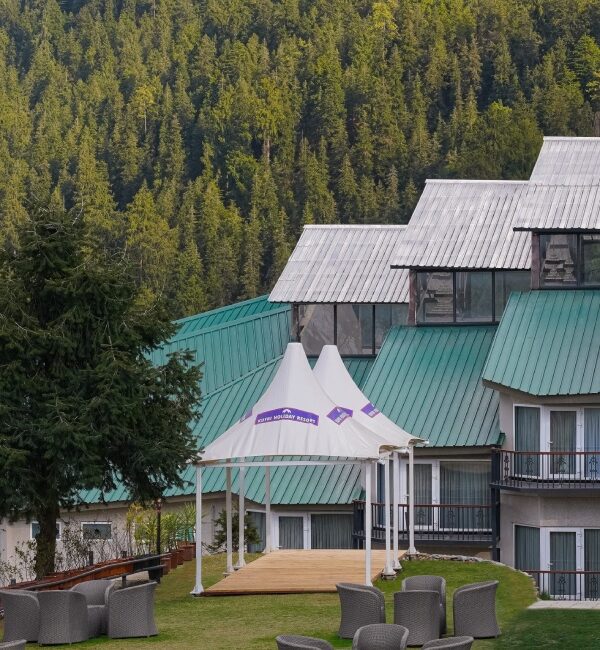
5-star luxury at 2,622 metres – 13 km from Shimla. Spa, restaurant, mountain views and bonfire evenings.
How to Reach the Himalayan Nature Park from Kufri Heritage Resort
One of the great advantages of basing yourself at Kufri Heritage Resort and Spa is how close the Himalayan Nature Park is. The park lies just 1 to 2 km from the resort, an easy 5-minute drive along the main road. If you prefer to walk, it is a pleasant 15-minute stroll through the cool mountain air, which is a lovely way to start a morning of wildlife watching.
For the best experience, leave the resort soon after breakfast so you reach the park gates around opening time at 9:00 AM, when the animals are most active. Remember that the park is closed on Mondays, so plan your visit for any other day of the week. Our front desk team is always happy to help arrange transport or share the latest timings and tips before you set off.
Combining the Nature Park with other nearby attractions such as Kufri Fun World makes for a full and rewarding day out, all within a short distance of the Kufri resort and spa.
Plan Your Shimla and Kufri Trip
Kufri Heritage Resort and Spa – the ideal mountain base 13 km from Shimla.
Frequently Asked Questions: Himalayan Nature Park Kufri 2026
Can you see snow leopards at the Himalayan Nature Park?
Yes, the park is home to snow leopards, but sightings are rare and not guaranteed. These cats are shy and often rest in cover during the day. Your best chance is from the dedicated observation point in the early morning, soon after the gates open. Bring patience and a telephoto lens, and treat any sighting as a special bonus rather than a certainty.
What is the entry fee for the Himalayan Nature Park?
The entry fee is approximately Rs 150 for adults and Rs 80 for children. Rates can change and there may be small extra charges for cameras, so it is worth confirming the current fee at the gate on the day of your visit.
What is the best time to see the animals?
Early morning, roughly between 9:00 AM and 11:00 AM, is by far the best time. The animals are most active soon after the park opens, while bears, deer, and pheasants are out and the elusive cats are more likely to be visible. By midday many animals rest in the shade.
Is it a good zoo to visit?
It is better described as a wildlife sanctuary than a traditional zoo. The animals live in large, forested enclosures within a 90-hectare reserve, so the experience is more like a guided nature walk than a typical zoo visit. It is well worth it for nature lovers, families, and anyone wanting to see Himalayan species in a natural setting.
What are the timings and which day is it closed?
The Himalayan Nature Park is open from 9:00 AM to 5:00 PM and is closed on Mondays. Plan your visit for any other day of the week, and arrive near opening time for the best wildlife sightings.
Stay 1.5 km from Mahasu Peak
Wake up in Kufri instead of driving up from Shimla. Rooms from ₹6,999, breakfast plans from ₹8,499.