AT A GLANCE: MASHOBRA NEAR SHIMLA
| Distance from Shimla | 13 km |
| Distance from Kufri | 15 km |
| Altitude | 2,149 metres |
| Highlights | Apple orchards, Craignano estate, Deodar forests, Mehli village, a premium five-star property near Kufri |
| Best Season | April-June (apple blossom), October (autumn colour), December-February (snow) |
| Type | Nature retreat – less touristy than Shimla |
Just 13 kilometres beyond the crowds of Shimla’s Mall Road, Mashobra sits quietly among apple orchards and ancient deodar forests at 2,149 metres – almost the same altitude as Shimla but with a fraction of the tourist traffic. This small hill village has been a well-kept secret among Himachali locals for decades, offering the same crisp mountain air and stunning Himalayan views without the noise, congestion, and inflated prices that often accompany a Shimla holiday. If you are planning a trip to the Shimla region in 2026 and want to go beyond the obvious, Mashobra deserves a full day on your itinerary.
Why Mashobra is a Hidden Gem Worth Your Time
There is a very particular kind of traveller who discovers Mashobra and never quite gets over it. The roads narrow as you leave the Shimla highway, the pine and deodar trees close in overhead, and within minutes the honking rickshaws and souvenir stalls of the city feel like a different world entirely. Mashobra is quieter, greener, and noticeably more affordable than Shimla – accommodation, local food, and guided orchard walks all tend to cost less here than in the main town.
The village sits on a forested ridge that runs roughly parallel to Shimla, connected by the old Hindustan-Tibet Road. This positioning means you are genuinely close to Shimla’s famous landmarks – Mall Road, the Viceregal Lodge, Jakhu Temple – while spending your evenings in a place where the loudest sound at night is likely to be wind through the cedar trees. For families, couples, and solo travellers who want the convenience of a Shimla base without the chaos, Mashobra offers the best of both worlds.
The area also benefits from remarkably diverse natural scenery across different seasons. Spring brings a wash of pink and white apple blossom across the hillsides. Summer keeps the landscape lush and green when the plains of India are baking. Autumn turns the mixed forests into a tapestry of amber and gold. And winter, particularly from December through February, regularly blankets Mashobra in snow – often more reliably than some of the more frequently visited spots closer to Shimla town.
Also Read
Related Reading
The Craignano Heritage Estate and a premium five-star property near Kufri
Two of the most storied properties in the entire Shimla region stand within or very close to Mashobra, and understanding their history adds real depth to any visit here.
Craignano is a historic estate that dates back to the colonial era, set in the heart of the Mashobra area. Named by its original British owners after a Scottish location, the property has old-world charm woven into every corner – stone walls, heritage orchards, and views that stretch out over forested valleys to the snow-capped ranges beyond. Today the estate is accessible to visitors who wish to explore its grounds and orchards, and it serves as one of the defining heritage experiences of this part of Himachal Pradesh. Walking through Craignano in the apple blossom season, when the trees are heavy with white and pink flowers and the air smells faintly of their fragrance, is one of those travel memories that stays with you for years.
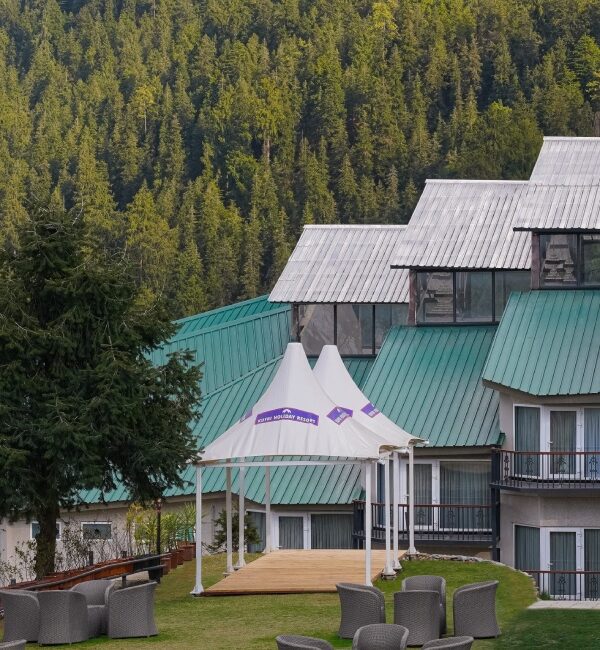
a premium five-star property near Kufri is the a leading legacy luxury five-star Group’s flagship Himalayan property, and it occupies a spectacular position at roughly 2,400 metres on the Mashobra-Chharabra ridge – just above Mashobra village itself. The original building on this site was once the residence of Commander-in-Chief Lord Kitchener, which gives you some sense of how highly the British regarded this particular piece of hillside. The a leading legacy luxury five-star a premium five-star property near Kufri is widely considered one of the finest luxury mountain resorts in all of Asia, with cedar-wood interiors, an infinity pool, a full spa, and views across the Himalayan foothills that are simply without comparison in this region. While a stay at a premium five-star property near Kufri requires advance planning and a significant budget, visitors can sometimes arrange to dine at the property by reservation. Even driving past the entrance and walking the forest paths nearby gives you a sense of the extraordinary environment this area occupies.
Ask the resort about your dates and room needs.
Check current room options and inclusions directly with the resort.
Apple Orchards and the Harvest Season
If one experience defines Mashobra more than any other, it is the apple orchards. Himachal Pradesh produces approximately half of all the apples grown in India, and the Mashobra-Kufri-Fagu belt is among the most productive apple-growing zones in the state. What this means practically is that at almost any time of year, you are never far from an orchard – but the orchards look and feel dramatically different depending on when you visit.
April through early May is apple blossom season. The bare trees that spent winter under snow or frost suddenly burst into masses of white and pale pink flowers, transforming the hillsides into something resembling an impressionist painting. This is arguably the single most photogenic time to visit Mashobra, and it coincides with pleasant daytime temperatures (typically 12-18 degrees Celsius) that make orchard walks thoroughly enjoyable.
July through September is when the fruit actually ripens. By August and into September, the trees are heavy with red and green apples, and many orchard owners in the Mashobra area welcome visitors to walk among the trees and even pick fruit directly. This is a genuinely wonderful experience for families – children in particular tend to find fresh apple picking far more exciting than any conventional tourist attraction. Local stalls and small roadside shops sell fresh juice, dried apple rings, apple jam, and bottles of the celebrated Himachali apple cider during this period.
October brings the tail end of harvest alongside the onset of autumn colour. The combination of loaded apple trees, turning leaves in amber and red, and the first hints of cool mountain air makes October perhaps the most rounded and satisfying month to visit the Mashobra area overall.
Stay at Kufri Heritage Resort and Spa
Luxury 5-star resort at 2,622 metres – the perfect base for exploring Shimla and Kufri. Mountain views, spa, restaurant and bonfire evenings.
Check Latest Price NowTrekking, Forest Trails, and the Mehli Village Walk
Mashobra is not a destination built around adventure tourism in the commercial sense – there are no zip-lines or bungee operators here. What it does offer is something more valuable for many travellers: quiet, well-marked forest trails through some of the most beautiful deodar cedar woodland in the Shimla district, with virtually no crowds.
The Deodar Forest Trails are the backbone of any active exploration of Mashobra. The forests around the village and along the Hindustan-Tibet Road contain some of the most impressive stands of deodar cedar in the region – trees that can grow to 40 metres and more, with straight silvery trunks and feathery blue-green foliage. Walking among them on a clear morning, with shafts of light breaking through the canopy and the smell of resin in the air, is a deeply restorative experience. Several informal trails wind through these forests, ranging from easy 30-minute loops to more extended 3-4 hour circuits that take you up to viewpoints overlooking the Shimla valley.
The Mehli Village Walk is one of the lesser-known but most rewarding excursions in this area. Mehli is a small traditional Himachali village located close to Mashobra, and the walk from the main road through the orchards and terraced fields to the village and back typically takes 2-3 hours at a relaxed pace. Along the way you pass traditional stone-and-wood houses, encounter local villagers going about their daily routines, and get views of the surrounding hills that are completely undisturbed by any commercial development. This is the kind of authentic rural Himachal experience that has become increasingly difficult to find near Shimla town itself.
The Craignano-Mashobra Loop connects the heritage estate with the main village via a trail that passes through both orchard land and forest. This is particularly popular in apple blossom season and takes roughly 2 hours for most walkers. The trail is not technically challenging but does involve some uneven ground, so good walking shoes are recommended.
For those who prefer cycling, the road between Mashobra and Kufri via Fagu is a favourite route among mountain bikers from Shimla. The road winds through forests and past orchards with gradients that challenge without being punishing, and the views along the way are consistently excellent.
Photography in Mashobra: When to Visit for the Best Shots
Mashobra rewards photographers across all four seasons, but the light, colours, and subjects differ substantially between months.
Apple Blossom Season (late March to early May) produces the iconic shots that have made this area famous on Indian travel photography platforms. The combination of white blossom against blue Himalayan sky, with snow still visible on the higher peaks in the background, is a composition that almost cannot fail. Early morning is the best time for orchard photography – the light is soft, the air is still, and the blossom often carries a faint dew that catches the light beautifully.
Monsoon Season (July-August) turns the entire landscape an almost impossibly intense green and brings dramatic cloudscapes rolling in from the south. This is not the easiest time to visit in terms of weather – landslides on the mountain roads can cause delays, and several days may be lost to heavy rain – but the photographers who do visit during this period often return with some of their most dramatic shots.
October Autumn is the season that looks most like a European mountain village. The oak, maple, and horse chestnut trees that grow alongside the deodar forests turn gold, amber, and deep red, and the harvest activity in the orchards adds human interest to the landscape. Early October combines the last of the fruit on the trees with the first serious autumn colour, making it a particularly productive period.
Winter Snow (December through February) transforms Mashobra into the kind of pristine white landscape that most visitors to Shimla hope to find but often miss because the town itself does not always receive heavy snowfall. Mashobra’s slightly higher position and forest cover means that snow tends to settle and stay here for longer periods than in Shimla centre. A fresh snowfall over the apple orchards and deodar trees, photographed in the first hour after dawn, is one of the finest natural subjects in the Shimla region.
How to Reach Mashobra from Kufri – Day Trip Planning
One of the most practical advantages of Mashobra for visitors staying near Kufri is the proximity. The drive from Kufri to Mashobra takes approximately 15 minutes under normal road conditions, covering around 15 kilometres via the Fagu-Shimla highway. The road passes through beautiful scenery throughout, making the journey itself an enjoyable part of the experience rather than merely a means to an end.
The most popular way to structure a combined Mashobra and Shimla day trip from a Kufri base is as follows:
- Early morning: Drive from Kufri to Mashobra (15 minutes). Walk the deodar forest trails or Mehli village path before the day warms up.
- Mid-morning: Explore the Craignano estate and orchards. If visiting during apple season, arrange a guided orchard walk in advance.
- Late morning: Drive the short distance toward a premium five-star property near Kufri and walk the forest paths in that area for views across the valley.
- Afternoon: Continue the 13 kilometres into Shimla for Mall Road, the Viceregal Lodge (Rashtrapati Niwas), and Jakhu Temple.
- Evening: Return to Kufri base via the Mashobra road, stopping for apple products at roadside stalls.
This route is genuinely achievable in a single day and provides a far more diverse and satisfying experience than spending the entire day in Shimla town. Local taxis from Kufri can typically be arranged by your resort to cover this circuit, and most drivers who work regularly in this area will know the best stopping points along the Mashobra road.
For those who prefer to self-drive, the roads are well-maintained in the Mashobra-Kufri-Shimla triangle for most of the year. During winter snowfall, chains or snow tyres may be advisable on some sections, and local advice on road conditions should always be taken before departing in January or February.
Plan Your Shimla and Kufri Visit
Kufri Heritage Resort and Spa is the ideal base for all Shimla-area sightseeing – 13 km from Mall Road, with direct access to Kufri snow activities and Himalayan Nature Park.
Call for Best PriceFrequently Asked Questions
Is Mashobra better than Shimla for a holiday?
It depends entirely on what you are looking for. Shimla offers heritage architecture, shopping, and a wide range of restaurants and hotels, but it is also genuinely crowded for most of the year. Mashobra, by contrast, is quieter, greener, and more relaxed – it is better suited to travellers who prioritise nature, peace, and authentic local experiences over urban conveniences. Many experienced Himachal travellers consider a combination of both – Mashobra for the natural setting and Shimla for the sightseeing – to be the ideal approach.
Does Mashobra receive snow in winter?
Yes, Mashobra receives snowfall regularly from December through February, and often into early March. Because it sits at 2,149 metres and is surrounded by forest that helps retain snowpack, Mashobra often has better and longer-lasting snow cover than parts of Shimla town itself, which sits slightly lower and has more urban heat. If your primary goal is seeing snow on a Shimla trip, the Mashobra-Kufri corridor is generally a more reliable destination than Shimla centre.
Can you visit a premium five-star property near Kufri as a non-guest?
a premium five-star property near Kufri is the a leading legacy luxury five-star Group’s luxury resort property and is primarily reserved for staying guests. Non-guests are generally not permitted to enter the main resort areas without a reservation. However, it is sometimes possible to arrange a dining reservation at the property’s restaurant, which would allow you to experience the setting and interiors. It is recommended to contact the a leading legacy luxury five-star a premium five-star property near Kufri directly and well in advance if you wish to arrange this. The forest roads and public paths surrounding the property are freely accessible and provide excellent views of the estate and surrounding landscape.
What is the best time to visit apple orchards in Mashobra?
There are actually two excellent windows for orchard visits, depending on what you want to see. Apple blossom season runs from approximately late March through early May, when the trees are covered in white and pale pink flowers – this is the most photogenic period. For actually seeing and tasting the fruit, the harvest season runs from August through October, with September being the peak month when most varieties are ripe and orchard visits with fruit picking are most commonly available. October combines the end of harvest with beautiful autumn foliage, making it the single most all-round appealing month for orchard visitors.
How far is Mashobra from Shimla city centre?
Mashobra is approximately 13 kilometres from Shimla’s Mall Road area by road. Under normal traffic conditions, the drive takes 25 to 40 minutes depending on the route taken and the level of traffic on the Hindustan-Tibet Road. During peak tourist season in May-June and around national holidays, traffic between Shimla and Mashobra can be heavy and journey times may be longer. Visitors staying at Kufri Heritage Resort find that Mashobra is even closer – just 15 kilometres from Kufri, a drive of around 15 minutes via Fagu – making it one of the most accessible day trips from a Kufri base.
Make your stay part of the itinerary
Check current room availability directly before booking.