AT A GLANCE: SHIMLA IN SEPTEMBER 2026
| Daytime Temperature | 10°C to 20°C |
| Night Temperature | 7°C to 12°C |
| Monsoon Retreat | By 15-20 September |
| Second Half Weather | Clear skies, excellent Himalayan views |
| Crowd Level | Low – ideal for peaceful travel |
| Price vs Peak Season | 25-35% below peak rates |
September is a month of transformation in Shimla. The heavy rains that define July and August gradually loosen their grip as the second week approaches, and by the third week the Himalayan sky opens up in a way that simply does not happen at any other time of year. The air is razor-clean after months of monsoon washing, the hills are an almost unreal shade of green, and the crowds that pack Mall Road in May and June have long since returned home. What remains is one of the most quietly spectacular travel windows in the entire Himachal Pradesh calendar.
If you have been putting off a Shimla trip because of the monsoon, the last ten days of September 2026 deserve a serious look. Trekking trails reopen, panoramic viewpoints deliver their clearest sightlines of the year, Navratri festivities bring genuine local colour, and hotel rates sit comfortably below the summer peak. This guide covers everything you need to know about visiting Shimla in September – from what the weather actually feels like on the ground to why photographers and trekkers consistently call this their favourite shoulder-season window.
Shimla September Weather: Two Very Different Halves
Understanding September in Shimla requires understanding that the month behaves almost like two separate seasons stitched together. The first half and the second half deliver genuinely different experiences, and which one you get depends entirely on when you book.
1 to 14 September – The Monsoon’s Final Act
The first two weeks of September still carry the tail of the monsoon. Rainfall is noticeably lighter than August – you will not see the sustained heavy downpours that can wash out roads in high summer – but showers remain frequent, particularly in the evenings and early mornings. Mist clings to the cedar forests around Jakhu Hill and the ridge above The Mall. Views of the Himalayan peaks are largely obscured by low cloud. The waterfalls at Chadwick and the streams running through Kufri are at full flow, which is spectacular in its own right, but this half of the month is best suited to travellers who are comfortable with unpredictable weather and are drawn by lush, moody landscapes rather than clear panoramas.
15 to 30 September – The Clear Season Arrives
The change around mid-September is dramatic and swift. As the monsoon retreats southward – typically completing its withdrawal from Himachal Pradesh between 15 and 20 September – the sky above Shimla shifts from a uniform grey to a deep, brilliant blue. Daytime temperatures settle into a comfortable 14°C to 20°C range, nights cool to around 8°C to 12°C, and the air carries a crispness that feels genuinely refreshing after months of humidity. This is when Shimla reveals what keeps people coming back: unobstructed views stretching to snow-capped peaks, forested hillsides still wearing their fullest monsoon green, and a quiet energy in the town that feels nothing like the chaotic summer rush.
The combination of vivid green landscapes and crystal-clear sky is unique to this precise window. By October, some of the green will have begun to fade toward autumn gold. By November, the cold has arrived in earnest. Late September sits in a sweet spot that rewards the traveller who times it correctly.
Related Reading
Why the Last 10 Days of September Are Among the Best of the Year
This is a strong claim, but the evidence is consistent across years. The period from roughly 20 to 30 September delivers a combination of conditions that simply does not exist at other times in the Shimla travel calendar.
Post-Monsoon Clarity and Himalayan Views
For most of July, August, and early September, the high Himalayan peaks – Shrikhand Mahadev, the Kinnaur Kailash range visible from elevated points near Kufri, and the distant snowfields above the Sutlej valley – are completely hidden behind monsoon cloud. When the monsoon retreats, the atmosphere is cleaner than at any other point in the year. There is minimal dust and haze. On a clear late-September morning, the views from Kufri, from Jakhu summit, and from the ridge at Chail are breathtaking in a way that even veteran visitors describe as surprising. If you have visited Shimla before and wondered what the snow peaks visible in the photographs actually look like in person, late September is when you will find out.
Green Landscapes at Their Peak
The monsoon delivers approximately three months of intense rainfall to these hills. Every slope, every forest path, and every roadside verge is saturated with green by the time September arrives. The oak and rhododendron forests around Kufri look like something from a wildlife documentary. The apple orchards – Himachal Pradesh is one of India’s premier apple-growing regions – are heavy with fruit by this point, and driving through the Shimla district in late September means passing trees loaded with red and golden apples against a backdrop of vivid green hillsides. This combination of monsoon-green landscape and clear blue sky is a visual experience that genuinely cannot be replicated in any other season.
Low Crowds and Genuine Calm
The summer tourist season – which peaks in May and June and runs hard through the school holiday period – is entirely over by September. The Mall Road does not have its winter weekend crowd either. What you get in late September is Shimla largely as locals experience it: unhurried, accessible, and free from the traffic queues and hotel shortages that characterise peak season. Booking a table at a good restaurant requires no planning. The walk from Scandal Point to Christ Church takes minutes rather than half an hour of navigating crowds. The ropeway to Jakhu runs without a long wait.
Prices at Near-Lowest Levels
September rates at Shimla and Kufri properties typically run 25 to 35 percent below the May-June peak. This is not the absolute lowest point of the year – January and February can be cheaper still – but those winter months come with cold, possible snow disruption, and no trekking. September combines low prices with genuinely excellent conditions, which makes it one of the best value months in the year for a quality Himachal trip. Call your preferred resort directly to ask about current September availability and pricing.
Skip the OTAs. Book direct with the resort.
Best rate guaranteed. Complimentary breakfast for direct bookings.
Trekking Resumes: September 20 Onwards
The monsoon effectively closes many of the higher-altitude trekking routes around Shimla and Kufri for the season. Trails become slippery, stream crossings run dangerously high, and the risk of landslides – a real hazard in this part of the Himalayas – is elevated through August and into early September. From around 20 September, as the monsoon withdrawal completes and the trails begin to dry, serious trekking resumes in the Shimla district.
The trails available from this date include some of the region’s most rewarding walks. The forested loop around Kufri through Fagu to Chini Bangla gives trekkers a proper half-day route through apple country and cedar forest with minimal elevation gain. The climb to Jakhu Peak (2,455 metres) is perfectly manageable for most fitness levels and delivers the kind of 360-degree panorama that justifies the effort immediately. For more experienced trekkers, the route toward Hatu Peak near Narkanda – reachable as a day trip from Kufri – provides views across to the Kinnaur Kailash range that can be transformative on a clear late-September day.
The key advantage of trekking in this window is trail quality combined with conditions. The paths are still soft with moisture – not the dry, dusty tracks of November – meaning good grip underfoot and far less dust. The forest is at maximum green density. Wildlife – including the Himalayan black bear in areas above 2,500 metres – is active after the monsoon season, though encounters are rare on established routes. Bird activity is high, with several migratory species passing through the Shimla hills on their way south. For birders, late September in this region is genuinely exciting.
Guides and local operators in Shimla and Kufri are available for route planning and escorted treks. It is always advisable to check trail conditions locally before setting out on any route above 2,800 metres, as conditions can vary significantly year to year depending on how late the monsoon runs.
Photography in September: A Unique Combination
Photographers who know the Shimla region tend to return in late September because the combination of conditions available in this window does not exist at any other time. The specific appeal is this: monsoon-green landscapes plus post-monsoon clear sky. You cannot have both in July – the sky is closed. You cannot have both in November – the green is gone. Late September is the only month where you can frame a shot with vivid emerald hillsides, a deep blue sky, and snow-capped peaks all in the same frame.
Key locations for photography in September include:
- Kufri viewpoints – The elevated positions around Kufri at 2,622 metres give wide-angle views across the valley toward the high Himalayan ridgeline. On clear mornings in late September, these views are exceptional and the green foreground is still at its richest.
- Fagu – The apple orchards between Kufri and Fagu are loaded with harvest-ready fruit in September. The combination of red apples, green trees, and mountain backdrop is one of the most photogenic subjects in Himachal Pradesh.
- Chadwick Falls – Still running at near-full monsoon capacity in September, Chadwick Falls is approximately a 40-minute drive from Shimla. The surrounding forest is dense and green, and the light on clear September mornings is soft and directional.
- Jakhu Temple at sunrise – The views east from Jakhu at first light on a clear September morning, with mist still sitting in the valley below and the peaks picking up early sun, are genuinely striking.
- The Mall Road and Colonial Architecture – The Victorian-era buildings of Shimla’s ridge and Mall Road photograph well in any season, but the clarity of post-monsoon light gives stone facades and the Christ Church spire a particularly clean, detailed quality.
Golden hour in late September falls around 6:15 to 6:45 AM and 5:45 to 6:15 PM. The low sun angle at these times creates long shadows across the hillsides and warm light on the forests that is difficult to replicate with any post-processing work.
Stay at Kufri Heritage Resort and Spa
5-star luxury at 2,622 metres – 13 km from Shimla. Spa, restaurant, mountain views and bonfire evenings.
Navratri in September – Local Festivals Add Colour
Navratri – the nine-night festival dedicated to the goddess Durga – falls in September or October depending on the lunar calendar. In 2026, Navratri begins on 22 September and runs through 1 October, placing it squarely in the post-monsoon clear season in Shimla.
For visitors who time their September trip to overlap with Navratri, the experience adds a significant cultural dimension to what is already a rewarding travel window. Shimla’s temples – particularly the Kali Bari Temple near The Ridge and the Tara Devi Temple on the outskirts of the city – are decorated and host evening aarti ceremonies that draw large gatherings of devotees. The atmosphere at these events is warm and welcoming to visitors, and the lighting of oil lamps at dusk against a backdrop of mountain ridgeline is genuinely memorable.
Local markets in Shimla’s Lower Bazaar area become particularly lively during Navratri, with street food vendors, textile sellers, and handicraft stalls adding to the usual commercial bustle. Traditional Himachali folk performances – including Nati dance, which UNESCO recognises as an intangible cultural heritage – can be witnessed at community gatherings during the festival period. This is a side of Shimla that most summer tourists never encounter, and it gives the late-September trip a depth that purely scenic tourism cannot provide.
It is worth noting that Navratri, while festive, does not create the same accommodation pressure as summer. The festival draws largely local and regional visitors who are not primarily staying overnight in Shimla, so hotel availability remains good throughout.
September vs October: Which Month Is Better for Shimla?
This is one of the most common questions from travellers planning an autumn Himachal trip, and the honest answer is that they are different rather than one being clearly superior. The choice depends on what you are prioritising.
Arguments for Late September
September wins on landscape colour. The monsoon green is at its absolute maximum in late September. Apple harvest is in full swing. Navratri adds a cultural dimension. Prices are 5 to 10 percent lower than October as October sees a modest uptick in visitors. The pool at Kufri Heritage Resort and Spa is still open – September is the final month before winter closure. If you want the Himalayan view combined with vivid green rather than autumn gold, September is the answer.
Arguments for October
October wins on weather reliability. By October, the monsoon is a distant memory and clear days are almost guaranteed for the entire month. Temperatures are cooler – ranging from 8°C to 18°C during the day and dropping to 4°C to 8°C at night – which suits walkers and trekkers who prefer brisk conditions. The forests begin their autumn colour change from mid-October, with oaks turning golden and chestnut leaves going rust-red. Diwali typically falls in October, bringing another significant festival moment. Visitor numbers in October are higher than September, which means slightly more activity in restaurants and markets but also slightly higher prices and less availability at premium properties.
The Verdict
For travellers who specifically want the best combination of visual drama – green hills, clear sky, snow peaks, warm enough for comfortable outdoor activity – and value pricing, late September edges ahead. For those who want guaranteed clear weather with no residual monsoon risk and are comfortable with slightly cooler nights, early to mid-October is the safer choice. Both months are dramatically better than July or August for most visitors.
The Pool at Kufri Heritage Resort – September Is Your Last Chance
Kufri Heritage Resort and Spa operates its outdoor pool through the warmer months, and September marks the final window before winter temperatures make outdoor swimming impractical. Sitting at 2,622 metres above sea level, the pool at Kufri Heritage offers a genuinely unusual experience – swimming with unobstructed mountain views on a clear post-monsoon afternoon in late September, when the sky is deep blue and the surrounding hillsides are intensely green, is the kind of moment that ends up in travel writing.
For families with children, or for guests who simply want the option of a pool alongside their mountain stay, booking in September means you catch this facility at the end of its operational season. By October, as evenings drop reliably below 8°C, outdoor swimming becomes less appealing and the pool typically closes for the winter season. If pool access is part of your plan for the Kufri trip, September is the month to move on.
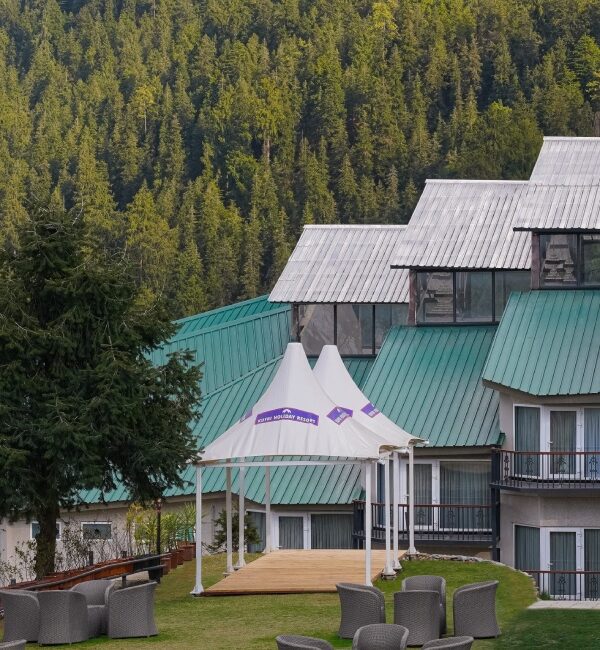
Beyond the pool, Kufri Heritage Resort and Spa offers the full range of 5-star facilities appropriate to a luxury mountain property: a spa with treatments suited to the mountain climate, a restaurant serving Himachali and continental cuisine, bonfire evenings that become particularly appealing as September nights cool, and guided access to the local trails and viewpoints that make Kufri one of the most rewarding bases in the Shimla district. The resort sits 13 kilometres from Shimla’s Mall Road – close enough for day trips into town, removed enough to feel genuinely away from the urban bustle.
Plan Your Shimla and Kufri Trip
Kufri Heritage Resort and Spa – the ideal base for all Shimla-area sightseeing and Kufri activities.
Frequently Asked Questions: Shimla in September 2026
When does the monsoon end in Shimla?
The monsoon typically retreats from the Shimla district between 15 and 20 September each year. The exact date varies slightly depending on the year, but by the third week of September, rainfall has reduced significantly and clear days begin to dominate. The first two weeks of September can still see showers and overcast skies, so if clear weather is a priority, plan your visit for the second half of the month.
What is the best week of September to visit Shimla?
The last ten days of September – roughly 20 to 30 September – consistently deliver the best combination of conditions. The monsoon has cleared, the sky is bright blue, the Himalayan peaks are visible after months behind cloud, and the hillsides are still wearing their fullest monsoon green. In 2026, this window also overlaps with the Navratri festival period, adding a cultural dimension to the trip. Avoid the first week if clear weather is essential.
Can I go trekking in Shimla in September?
Trekking in the Shimla and Kufri area resumes from around 20 September as the monsoon withdrawal dries out the higher trails and reduces landslide risk. From this date, routes including the Kufri-Fagu forest loop, the Jakhu Hill climb, and day excursions toward Hatu Peak near Narkanda are all viable. The trails are in excellent condition at this time – still soft underfoot from the monsoon but not yet the dry dusty tracks of late autumn – and the landscape is at its most vivid. Always check current trail conditions locally before heading out on routes above 2,800 metres.
Is the pool open at Kufri Heritage Resort in September?
Yes – September is typically the final month of pool operations at Kufri Heritage Resort and Spa before winter temperatures make outdoor swimming impractical. The pool is open through September, giving guests staying in this period the opportunity to swim with mountain views in the post-monsoon clear season. October onwards, as evening temperatures drop reliably below 8°C, the pool closes for the winter. Call the resort directly to confirm current seasonal pool status and check latest pricing.
Is September or October better for visiting Shimla?
Both months are excellent, but they offer different experiences. Late September combines monsoon-green landscapes with newly clear post-monsoon skies – a visual combination unique to this narrow window. It also offers slightly lower prices and the pool is still operational. October brings more reliable clear weather throughout the entire month, cooler and crisper conditions ideal for walking, and the beginning of autumn colour in the forests. September is the stronger choice for photography and value; October is better for those who want guaranteed sun and cooler trekking temperatures throughout their stay.
Ready to experience Kufri Heritage?
Talk to the resort directly. Real rates, an answer within the hour, no booking fees.