
Key Takeaways
● Mahasu Peak, with a summit near 2,800 metres, offers a 360-degree Himalayan panorama on a 4-5 hour round-trip hike best begun at 6am.
● Golden hour is 6:00-7:30am and 5:30-6:30pm, and the Kufri Fun World slopes get 20-40 cm of snow from December to February.
● The 90-hectare Himalayan Nature Park is best for wildlife between 8-11am with a 200mm+ telephoto lens; the monal pheasant is the prized shot.
Kufri Photography - At a Glance
| Best Photo Spot | Mahasu Peak viewpoint - 360-degree Himalayan panorama |
| Best for Snow Photos | December to February - Kufri Fun World slopes |
| Golden Hour | 6:00-7:30am (sunrise) and 5:30-6:30pm (sunset) |
| Wildlife Photography | Himalayan Nature Park - monal pheasant, Himalayan bear |
| Best Season for Photos | March-April (rhododendrons) | Dec-Jan (snow landscapes) |
| Altitude | 2,622 metres - dramatic mountain light quality |
Kufri is one of Himachal Pradesh's most photogenic destinations. At 2,622 metres above sea level, the light quality is dramatic and clear. Himalayan peaks frame the horizon, open meadows provide unobstructed foregrounds, and the changing seasons transform the landscape from snow-covered white in winter to vibrant green in summer to golden-red in autumn. Whether you shoot on a smartphone or a professional camera, Kufri offers exceptional photography opportunities.
This guide covers the best photography spots in Kufri, the ideal times for each shot, what to expect at each location, and practical tips for getting the best images at high altitude.
Top Photography Spots in Kufri
1. Mahasu Peak - The Best Viewpoint in Kufri
Mahasu Peak (2,146 metres from the base, summit at about 2,800 metres) is the top photography destination in Kufri. From the summit, you get a 360-degree panoramic view of the Greater Himalayan Range - snow peaks, deep valleys, pine forests, and on clear days, the distant peaks of the Kinnaur and Spiti ranges. The hike to Mahasu Peak takes 4-5 hours round trip from Kufri. Start at first light (6am) to catch the sunrise and the golden hour on the peaks before clouds build up in mid-morning.
Best shots from Mahasu Peak: Sunrise panoramas, mountain ridge lines, cloud seas in the valleys below, wide-angle Himalayan landscapes
2. Kufri Fun World Slopes - Snow Season Shots
In winter (December to February), the open slopes around Kufri Fun World are covered in snow. These are the most Instagrammable spots in Kufri - wide white meadows with pine forests and Himalayan peaks in the background. Horse riders in traditional dress against the white snow make for striking images. The slopes face east, making morning light (7-10am) the best time for snow photography.
Best shots: Snow landscapes with blue sky, horse riding silhouettes against snow, pine trees with snow on branches, children playing in snow
3. Himalayan Nature Park - Wildlife Photography
The Himalayan Nature Park in Kufri is a 90-hectare wildlife reserve with some of Himachal's best wildlife photography opportunities. The monal pheasant (Himachal's state bird) with its iridescent plumage is the prized shot here. Himalayan black bears, barking deer, and a variety of mountain birds also make appearances. Visit between 8-10am when animals are active. Use a telephoto lens (200mm+) for the best wildlife shots.
Best shots: Monal pheasant in morning light, Himalayan black bear, mountain birds, snow leopard (in enclosure)
4. Kufri Village Road - Culture and Daily Life
The road through Kufri village offers authentic Himachali rural life photography. Apple orchards in spring (March-April) covered in pink and white blossoms are spectacular. Elderly Himachali women in traditional green and maroon dress, old stone houses with slate roofs, and the local market at Kufri provide strong documentary photography material.
Best shots: Apple blossoms in spring, Himachali women in traditional dress, village life, stone architecture with mountain background
| Location | Best Season | Best Time of Day | Type of Shot |
|---|---|---|---|
| Mahasu Peak | Oct-Nov, Mar-Apr | 6-9am sunrise | Panorama, landscape |
| Kufri Fun World Slopes | Dec-Feb (snow) | 7-10am | Snow landscapes |
| Himalayan Nature Park | Mar-Jun, Sep-Nov | 8-11am | Wildlife, birds |
| Kufri Village Road | Mar-Apr (blossoms) | 8am-4pm | Culture, orchards |
| Resort mountain views | Any season | 6:30-8am, 5-6:30pm | Golden hour peaks |
Stay at Kufri Heritage Resort for the Best Mountain Views
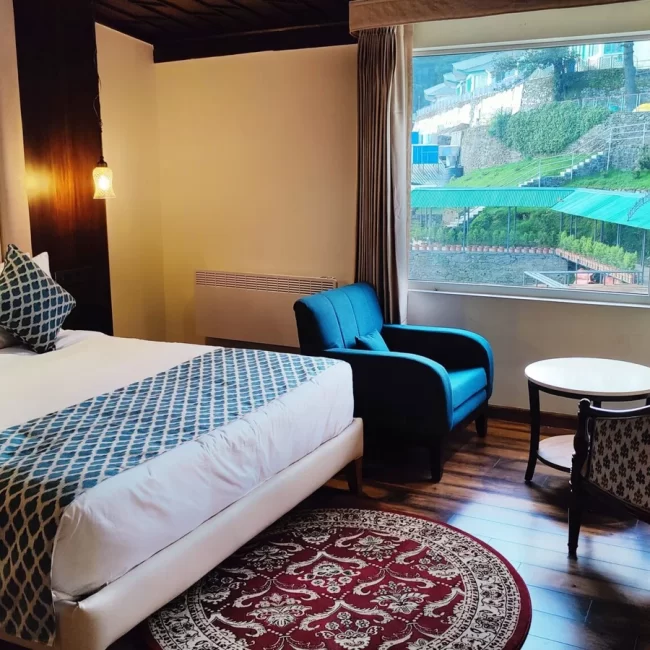
Mountain view rooms with panoramic Himalayan vistas. Wake up to golden hour on the peaks every morning. Outdoor pool with mountain backdrop for stunning resort photography.
Book Mountain View RoomRelated Reading
Kufri Photography by Season
Winter (December to February) - Snow Photography
Winter is Kufri's most photogenic season for landscape photography. The Kufri Fun World slopes are covered in snow, often with over 30 cm depth in January. The snow creates a clean white canvas with the dark pine trees and blue sky as contrast. Snowfall photos - with fresh snow falling on pine branches and rooftops - are best captured during or immediately after a snowfall event. Morning light (7-9am) on snow gives a warm golden tone that transforms an otherwise stark white landscape.
Spring (March to April) - Blossoms and Rhododendrons
March and April bring Kufri's most colourful season. The hillsides are covered in red and pink rhododendron flowers (Himachal's state flower). Apple orchards burst into white and pink blossom in mid-March to early April. The blue sky, green meadows, and colourful flowers create natural colour contrasts that are exceptional for photography. This is the recommended season for flower and landscape photography in Kufri.
Summer (May to June) - Lush Green Landscapes
Summer transforms Kufri into deep green. The meadows, forests, and hillsides are at their most lush. Afternoon clouds create dramatic skyscapes above the mountains. The Himalayan Nature Park is most active in summer mornings. Outdoor activities like horse riding and trekking provide excellent action photography opportunities.
Autumn (October to November) - Crystal Clear Views
October and November are the clearest months in Kufri. After the monsoon ends, the air is washed clean and the views of the snow-capped Himalayan peaks are the sharpest of the year. The turning of the oak and deodar trees to golden and amber creates beautiful autumn colour palettes. Sunrise shots from Mahasu Peak in October with fresh autumn colour and crisp mountain air are among Kufri's finest photography opportunities.
Photography Tips for Kufri
- Arrive at golden hour - 6:00-7:30am gives the best warm mountain light on the snow peaks and green slopes. Most tourists arrive after 9am, so early birds get the best unobstructed shots.
- UV filter is essential - UV radiation at 2,622 metres is much stronger than at sea level. A UV filter protects your lens and reduces haze in landscape shots.
- Keep extra batteries - Cold temperatures (especially in winter, -5 to 5 deg C) drain batteries much faster. Keep spare batteries inside your jacket, close to your body.
- Telephoto for wildlife - A 200mm+ telephoto lens is needed for the Himalayan Nature Park. Animals will not come close. Prime telephoto lenses work better than zoom in the low-light conditions of the park.
- Clear mornings only for peaks - Himalayan peak views from Kufri are typically clear from 6am to 10am. After that, clouds often build on the peaks. Plan all viewpoint visits for early morning.
- Snow etiquette - In winter, walk carefully near the Fun World slopes. Disturbing fresh snow affects everyone's photography. Stay on marked paths.
Plan Your Kufri Photography Trip
Kufri Heritage Resort is the ideal base for Himalayan photography. Early morning wake-up calls for sunrise shoots, packed breakfast for Mahasu Peak treks, and mountain view rooms for in-resort golden hour photography.
Enquire About Photography PackagesAlso Read
- Kufri in January: Snow, Cold and What to Expect
- Adventure Sports in Kufri: Full Activity Guide
- Romantic Places Near Shimla for Couples
- Best Places to Visit Near Kufri
Frequently Asked Questions
What are the best photography spots in Kufri?
The best photography spots in Kufri are Mahasu Peak (360-degree Himalayan panorama), the Kufri Fun World slopes in winter (snow landscapes), the Himalayan Nature Park (wildlife, monal pheasant), and Kufri village road (apple orchards in spring, Himachali culture). Mountain view rooms at Kufri Heritage Resort also offer stunning golden hour shots of the Himalayan peaks.
When is the best time for photography in Kufri?
The best time for photography in Kufri depends on your subject: December to February for snow landscapes, March to April for rhododendron blossoms and apple orchards, May to June for lush green landscapes, and October to November for crystal-clear mountain views and autumn colours. For golden hour shots, 6-7:30am and 5:30-6:30pm are ideal in all seasons.
Can I see snow in Kufri for photography?
Yes, Kufri regularly receives snowfall from December to February. The Kufri Fun World slopes get 20-40 cm of snow in good years. For guaranteed snow photography, visit in January when snowfall is most reliable. The snow slopes, pine forest, and Himalayan peaks in the background make for exceptional winter landscape photography.
Is Kufri good for wildlife photography?
Yes, the Himalayan Nature Park in Kufri is one of the best wildlife photography locations in Himachal Pradesh. Key subjects include the monal pheasant (Himachal state bird with brilliant iridescent plumage), Himalayan black bears, barking deer, and mountain pheasants. Visit between 8-11am with a telephoto lens (200mm+) for the best results.
What photography equipment do I need for Kufri?
For Kufri photography, bring a wide-angle lens (16-35mm) for mountain landscapes, a telephoto lens (200mm+) for wildlife at the Nature Park, a UV filter to reduce haze at high altitude, and extra batteries (cold drains batteries fast in winter). A tripod is useful for low-light sunrise shots at Mahasu Peak. Waterproof camera bags are recommended in late June and the monsoon season.
 Call Us
 WhatsApp